
TOKU SP
Revenue acceleration, AI-CX adoption, and operating leverage
KEY INSIGHTS #1
Enterprise AI adoption is moving from experimentation into customer-service deployment.
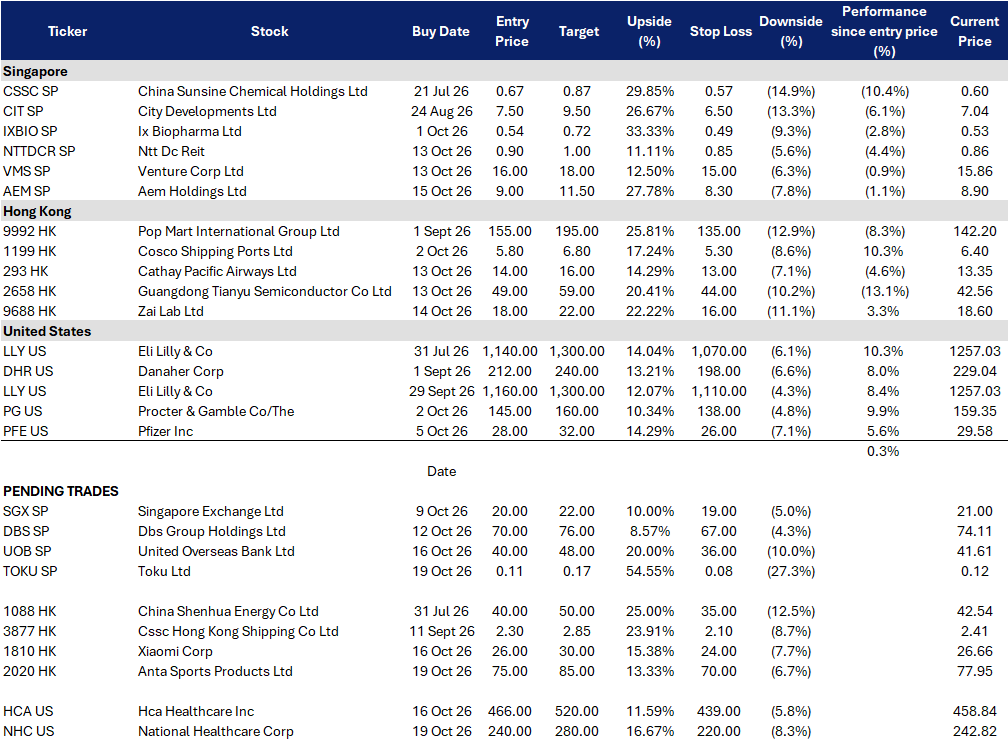
Toku is positioned at the intersection of enterprise communications and applied AI, where companies are increasingly embedding AI directly into contact-centre workflows. Recent partnerships strengthen this positioning: Toku expanded its Zoom relationship in October to provide carrier-grade connectivity for Zoom Contact Center across 14 Asia-Pacific markets, while its Core42 partnership enables deployment on sovereign cloud infrastructure in the UAE. These partnerships broaden distribution and strengthen Toku’s competitive position in regulated markets where connectivity, data residency and compliance create meaningful barriers to entry.
KEY INSIGHTS #2
FY26 guidance has been raised sharply as 2H26 conversion accelerates.
Management has upgraded FY26 revenue growth guidance to above 20%, a material step-up from its July outlook that only called for 2H26 growth to exceed the 13.0% achieved in 1H26. Given FY25 revenue of US$34.8M, the new guidance implies FY26 revenue above approximately US$41.8M and, after US$18.8M generated in 1H26, requires 2H26 revenue growth of more than 26%. This suggests commercial conversion has accelerated materially since the half-year results rather than merely tracking management’s earlier expectations. Importantly, the order book reached approximately US$35.4M at end-September, +20.8% from June and +51.3% from the IPO Offer Document, providing tangible support for the upgraded outlook.

UOB SP
ASEAN franchise growth, wealth-management momentum, and capital returns
KEY INSIGHTS #1
The recent Singapore-bank correction provides a cleaner entry despite resilient fundamentals.
UOB fell from above S$43 in early October to S$40.25 on 8 October as Singapore banks sold off following Citi’s downgrade of OCBC, concerns around softer 3Q earnings and rising global bond yields. The move was largely sector-wide rather than UOB-specific. Operationally, 2Q26 net profit still increased 10% YoY to S$1.5B, while loans grew 5% despite NIM pressure. UOB has since recovered to around S$41.20, but remains below its recent highs, creating a more attractive entry ahead of its 3Q26 trading update on 4 November.
KEY INSIGHTS #2
Share buybacks and dividends provide tangible support through the earnings slowdown.
UOB maintained an interim dividend of S$0.88 per share, representing roughly a 50% payout ratio, while continuing its S$2B capital-return buyback programme. Around 40% of the programme had already been completed by July, and purchases are continuing in October, including 70,000 shares bought and cancelled on 12 October around S$40. UOB also retains a strong 15.4% CET1 ratio, giving it capacity to sustain capital returns even as NIM normalises. With RHB’s latest target at S$47.60, an entry around S$40.80 offers roughly 16% upside before dividends if 3Q earnings demonstrate that fee growth and ASEAN momentum can offset margin pressure.
2020 HK
Multi-brand resilience, outdoor growth, and PUMA optionality
KEY INSIGHTS #1
Premium outdoor and specialist sports remain the strongest pockets of China sportswear demand.
China’s overall consumer environment remains competitive, but ANTA continues to outperform through categories where participation and premiumisation remain structurally stronger, including outdoor, running, racquet sports and technical apparel. 1H26 group revenue rose 12.9% YoY to RMB43.51B and operating profit increased 16.1% to RMB11.76B, while gross margin expanded 0.5ppt to 63.9%. Management continues to target low-single-digit retail growth for ANTA, mid-single-digit growth for FILA and 20–25% growth for the Other Brands portfolio, highlighting that premium outdoor brands remain the main growth engine despite softer near-term consumption.
KEY INSIGHTS #2
Completion of the PUMA investment creates a major globalisation rerating catalyst.
ANTA completed the acquisition of a 29.06% stake in PUMA on 7 October for EUR1.51B, making it PUMA’s largest shareholder. The strategic opportunity is significant: ANTA can apply the multi-brand operating playbook previously demonstrated with FILA and its outdoor portfolio to a global sports brand whose China exposure remains relatively underdeveloped. ANTA has said it intends to preserve PUMA’s independent brand identity rather than pursue a full takeover, limiting near-term integration risk while retaining substantial turnaround upside. With 2020 HK around HK$71 versus DBS’s HK$112 target and broader analyst targets above HK$100, an entry around HK$70 offers attractive risk-reward if PUMA execution improves and the premium-brand portfolio continues compounding.

1810 HK
EV scaling, smartphone-margin recovery, and AI-chip optionality
KEY INSIGHTS #1
EV growth is becoming increasingly important as the smartphone industry enters a difficult downcycle
Global smartphone shipments fell 20% YoY in 3Q26, with Xiaomi shipments dropping more than 30% as memory shortages and rising component costs forced manufacturers to prioritise profitability over low-end volumes. However, Xiaomi’s diversification is increasingly cushioning this weakness. Smart EV, AI and new-initiative revenue reached RMB44.8B in 1H26, +12.3% YoY, while vehicle deliveries rose 17.7% to 185,055 units despite China’s passenger-vehicle market declining 20%. September EV deliveries recovered to roughly 40,000 units, +33% MoM, helped by expansion beyond SU7/YU7 into its new extended-range vehicle lineup. This increasingly shifts Xiaomi away from being valued solely as a smartphone manufacturer.
KEY INSIGHTS #2
Proprietary chips and AI create a second rerating angle beyond EVs
Xiaomi launched its second-generation Xring O3 processor in August, manufactured on TSMC’s 3nm process, following more than 1M devices powered by the first-generation O1. The company is also developing dedicated Xring chips for AI processing and autonomous driving and has invested more than RMB20B into semiconductor development, with a design team exceeding 3,000 engineers. This vertical integration can gradually reduce dependence on Qualcomm and MediaTek, improve product differentiation and connect Xiaomi’s smartphone, EV and AI ecosystems. At around HK$27 today, the stock remains well below its 52-week high near HK$50, while analyst consensus sits around HK$34.7; an entry nearer HK$26 offers a more attractive setup following the recent rebound.

NHC US
Reimbursement tailwind, occupancy recovery, and real-estate ownership uplift
KEY INSIGHTS #1
Medicare reimbursement remains supportive as occupancy continues recovering
CMS increased FY27 Skilled Nursing Facility Medicare payment rates by 2.4%, effective 1 October 2026, adding an estimated US$883M of payments across the industry. NHC is already seeing improving fundamentals: skilled-nursing occupancy reached 90.1% in 2Q26 versus 89.4% a year earlier, while Medicare and managed-care per diem rates increased 2.2% and 2.9%, respectively. Tennessee Medicaid reimbursement increases should additionally contribute around US$2M of annual revenue. With skilled nursing still constrained by labour availability and bed supply, higher occupancy combined with reimbursement increases provides a favourable backdrop for same-facility revenue growth.
KEY INSIGHTS #2
The US$560M NHI transaction converts a large rental burden into owned real estate
On 1 July, NHC acquired the real estate underlying 32 skilled nursing facilities and three independent-living facilities from National Health Investors for US$560M, terminating the existing master lease. Importantly, NHC already operated almost all these facilities, substantially reducing integration risk versus a conventional acquisition. Management expects ownership to be accretive to earnings and cash flow over time, although the deal introduces higher leverage through a new US$475M term loan. The transaction therefore shifts NHC from being partially a tenant to owning a much larger share of its operating asset base, providing greater control over facilities and potentially stronger long-term economics.

HCA US
Scaled healthcare network positioned for rising hospital and outpatient demand
KEY INSIGHTS #1
network investment, workforce development and buybacks support EPS growth.
HCA continues to leverage its scale across 190 hospitals and approximately 2,600 ambulatory sites, with 2Q26 revenue rising 8.7% YoY to US$20.2bn, same-facility admissions increasing 2.5% and adjusted EPS growing 11%. The company is maintaining US$5.0-5.5bn of 2026 capex, while its recent acquisition of the College of Health Care Professions, serving more than 8,000 students, strengthens HCA’s internal healthcare talent pipeline; alongside US$2.1bn of Q2 share repurchases and US$7.2bn of remaining authorization, these investments provide multiple levers for medium-term capacity and per-share earnings growth.
KEY INSIGHTS #2
Ageing demographics and the shift toward outpatient care support healthcare utilisation.
Structural growth in U.S. healthcare demand should support HCA’s hospital and ambulatory network, with CMS projecting national healthcare expenditure to grow 5.4% annually through 2034, ahead of GDP growth of 4.1%, while hospital spending is expected to rise 5.2% annually. At the same time, care continues to migrate outside traditional hospital settings, with outpatient volumes projected to increase roughly 18% by 2035, favouring scaled systems such as HCA that can capture patients across hospitals, surgery centres, emergency rooms, urgent care and physician clinics.
STOCKS
STOCKS
–
STOCKS