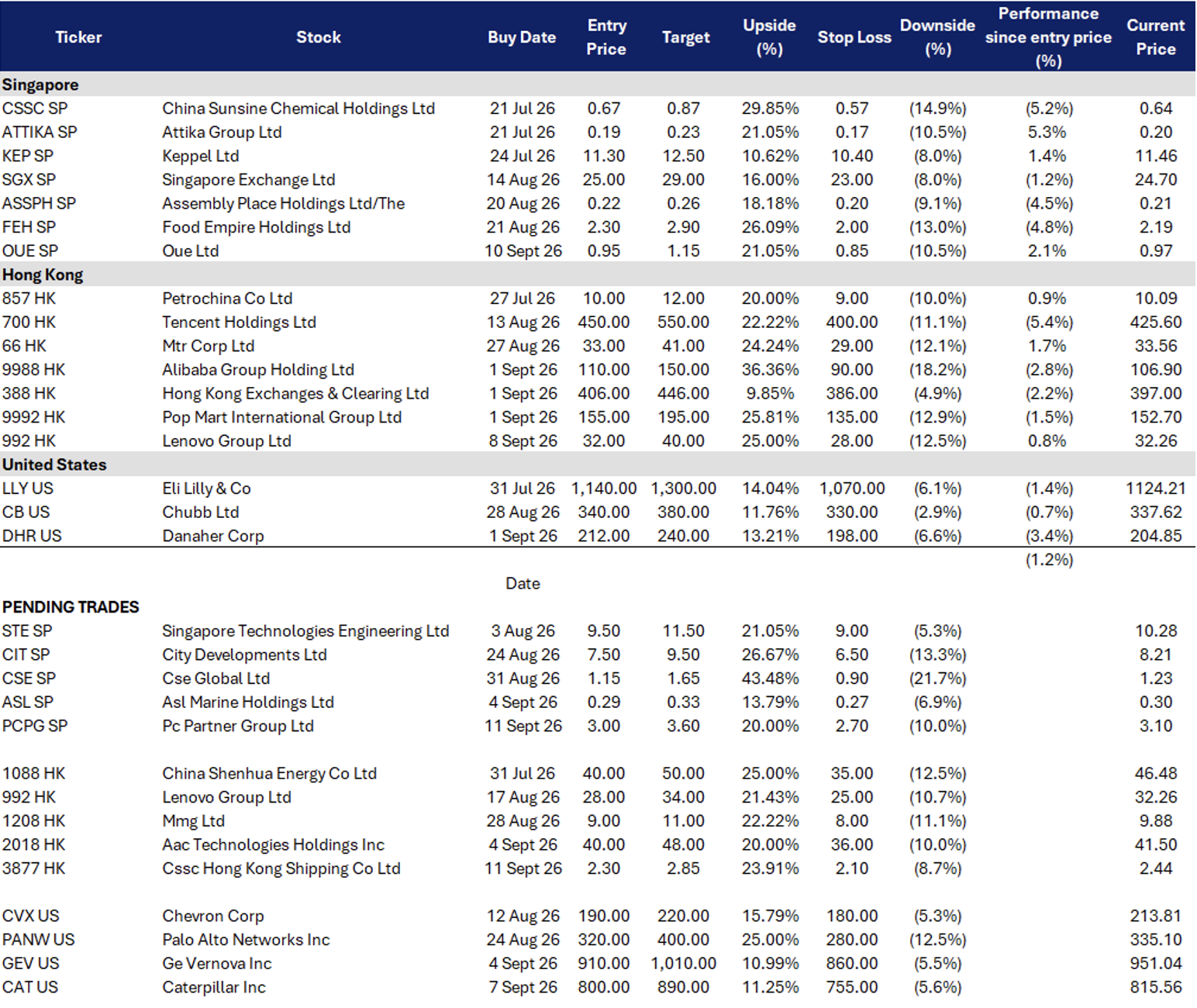

PCPG SP
GPU pricing power, AI-server optionality, and margin normalization
KEY INSIGHTS #1
Tight GPU and graphics-memory supply is supporting ASPs even as unit volumes remain constrained.
The current memory shortage is creating an unusual earnings setup for graphics-card manufacturers. In 1H26, PC Partner’s own-brand graphics-card revenue fell 9.2% to HK$4.46B as shipment volume declined 18.4%, but average selling prices increased 10.7%. More importantly, ODM/OEM graphics-card revenue jumped 73.9% to HK$1.48B despite a 38.4% volume decline because ASP increased 181%. Group revenue therefore still rose 1.5% YoY to HK$6.45B, while gross margin expanded sharply to 16.5% from 10.5%. PC Partner has previously indicated that higher graphics-memory prices should continue supporting VGA pricing until supply improves, creating a near-term buffer against lower unit output.
KEY INSIGHTS #2
AI servers provide a credible second growth engine beyond consumer GPUs.
PC Partner is transitioning from primarily an add-in-board GPU manufacturer toward higher-value enterprise compute. At NVIDIA GTC 2026, the group showcased a 4U NVIDIA MGX server using RTX PRO 6000 Blackwell Server Edition GPUs and ConnectX-8 networking, alongside a 6U eight-GPU server targeted at on-premise AI and digital-twin workloads. The 4U platform supports up to eight GPUs with 96GB of GDDR7 memory per card. Management has also indicated that 6U systems have already started shipping, while the MGX 4U server is expected to become available from September. Initial volumes are unlikely to transform group earnings immediately, particularly where systems are sold as lower-margin barebones, but successful qualification with system integrators and data centres could materially expand PC Partner’s addressable market beyond gaming GPUs.

ASL SP
Ship-repair resilience, deleveraging, and Singapore infrastructure optionality
KEY INSIGHTS #1
An ageing regional fleet and sustained offshore activity support recurring ship-repair demand.
ASL Marine is increasingly positioned as a service-led marine play rather than a cyclical shipbuilder. Management expects ship-repair demand to remain resilient because of ageing vessels, regulatory maintenance requirements, high vessel replacement costs and the technical complexity of repair work. Its Singapore and Batam yards also sit close to the Straits of Malacca, providing access to one of the world’s busiest shipping corridors. FY26 ship-repair demand remained resilient while group revenue increased 3.0% YoY to S$360.7M, giving ASL relatively defensive exposure to the broader marine and offshore upcycle.
KEY INSIGHTS #2
Singapore’s S$100B coastal-protection programme creates a multi-year chartering and dredging opportunity.
ASL has direct exposure to land reclamation, dredging, port development and marine infrastructure through its chartering fleet and dredging capabilities. Singapore’s planned S$100B coastal-protection programme, together with the proposed New Western Island development around Jurong Island, could drive long-duration demand for dredging and marine construction vessels. ASL already ended FY26 with approximately S$61M of long-term ship-chartering contracts, while management is selectively rebuilding its shipbuilding order book toward higher-value projects.

3877 HK
Shipping-rate resilience, long-duration leasing cash flow, and fleet expansion
KEY INSIGHTS #1
Elevated freight rates and tight shipyard capacity are supporting vessel values and leasing economics.
The shipping backdrop remains favourable across several vessel classes. In 1H26, the ClarkSea Index averaged US$39,043/day, +61% YoY, while the BDI increased 82% and tanker rates strengthened sharply amid longer voyage distances and geopolitical disruption. Newbuild demand is also elevated, with US$132.6B of global orders placed in 1H26 and core shipyard delivery slots extending to around 4.3 years. Higher charter rates and replacement costs support both the residual value of CSSC Shipping’s fleet and demand for third-party ship financing.
KEY INSIGHTS #2
A ten-vessel newbuild programme creates the next leg of asset and earnings growth.
On 1 September, CSSC Shipping agreed to acquire ten new vessels from China Shipbuilding Group-related yards for RMB3.24B, or approximately HK$3.78B, subject to shareholder approval. The transaction follows six new sale-and-leaseback projects worth US$324M signed during 1H26 and demonstrates that management is redeploying capital into a stronger shipping market rather than allowing the financing book to run down. With the shares around HK$2.32, the stock trades at roughly 6–7x forward earnings with a c.7% prospective dividend yield, while DBS recently set a HK$2.87 target. Continued fleet deployment and stable credit costs provide a credible path toward that valuation.

992 HK
AI-PC leadership, server-margin inflection, and on-device AI optionality
KEY INSIGHTS #1
AI PCs are becoming a real replacement-cycle driver rather than just a marketing theme.
Lenovo entered FY27 with its strongest quarterly performance on record, with 1Q27 revenue rising 43% YoY to US$26.9B. Global PC market share reached 24.2%, while Lenovo’s AI-PC market share increased to 25.1%, maintaining its global leadership. The next catalyst is broader on-device AI adoption as more applications run locally rather than entirely through the cloud. NVIDIA’s new RTX Spark platform is scheduled to launch in October through manufacturers including Lenovo, adding another premium AI-PC category alongside Windows Copilot+ devices. If enterprise refresh demand continues, Lenovo should benefit disproportionately because of its scale, channel reach and leading commercial-PC franchise.
KEY INSIGHTS #2
The server business has moved from a low-margin drag into a meaningful profit engine.
The key earnings surprise in 1Q27 came from Infrastructure Solutions Group, where revenue nearly doubled YoY to a record US$8.5B and operating profit reached US$777M. ISG operating margin jumped to a record 9.1%, materially above both the prior quarter and market expectations. This changes the investment case: historically Lenovo traded primarily as a low-multiple PC hardware company, but sustained profitability in AI servers, cloud infrastructure and inference hardware could justify a higher group multiple. AI-related revenue already reached US$9.3B in the quarter, +60% YoY and equivalent to 35% of group revenue.

CAT US
Broad industrial beneficiary of AI infrastructure, construction and power demand
KEY INSIGHTS #1
Expanding from heavy equipment into power and AI-enabled industrial systems.
Caterpillar’s growth is broadening beyond traditional construction and mining equipment into power generation and digitally enabled industrial operations. In 2Q26, sales rose 24% YoY to US$20.5bn, with all three major segments growing and Power & Energy revenue increasing 17% to US$8.24bn; strong order rates and a rising backlog point to continued demand visibility. Its new collaboration with FieldAI, using robotics, digital twins and NVIDIA technologies, also strengthens Caterpillar’s push toward more autonomous and productive industrial operations.
KEY INSIGHTS #2
AI data centres and infrastructure spending expand demand for equipment and power.
The AI infrastructure buildout is creating demand not only for data-centre construction but also for backup generation, gas engines, turbines and supporting electrical infrastructure, complementing continued U.S. infrastructure and mining investment. This gives Caterpillar exposure across the physical buildout of AI capacity, from earthmoving and construction machinery to distributed power generation, extending its growth opportunity beyond the traditional machinery cycle.

GEV US
Power-infrastructure leader leveraged to the global electricity and AI data-centre buildout
KEY INSIGHTS #1
Record backlog and expanding power-to-rack offering improve earnings visibility.
GE Vernova’s order book continues to strengthen, with 2Q26 orders rising 88% organically to US$24.2bn, backlog reaching US$176bn, and data-centre orders exceeding US$5bn year-to-date, more than double the full-year 2025 level. The company is expanding gas-turbine capacity toward 30GW annually by 2030, while new products such as its medium-voltage UPS extend its offering from generation and grid connection all the way into the data centre, strengthening its position across the entire “power-to-rack” value chain.
KEY INSIGHTS #2
Surging electricity demand is accelerating investment across generation and grids.
Rapid growth in AI data centres, electrification and renewable-energy deployment is forcing utilities to add generation capacity and modernise transmission networks, creating structural demand for gas turbines, transformers, switchgear, HVDC and nuclear technologies. GE Vernova is positioned across these bottlenecks, from National Grid’s major transmission upgrades in the UK to its BWRX-300 nuclear programme in Sweden, giving it exposure to both near-term grid spending and longer-term baseload power investment.
STOCKS
–
STOCKS
STOCKS