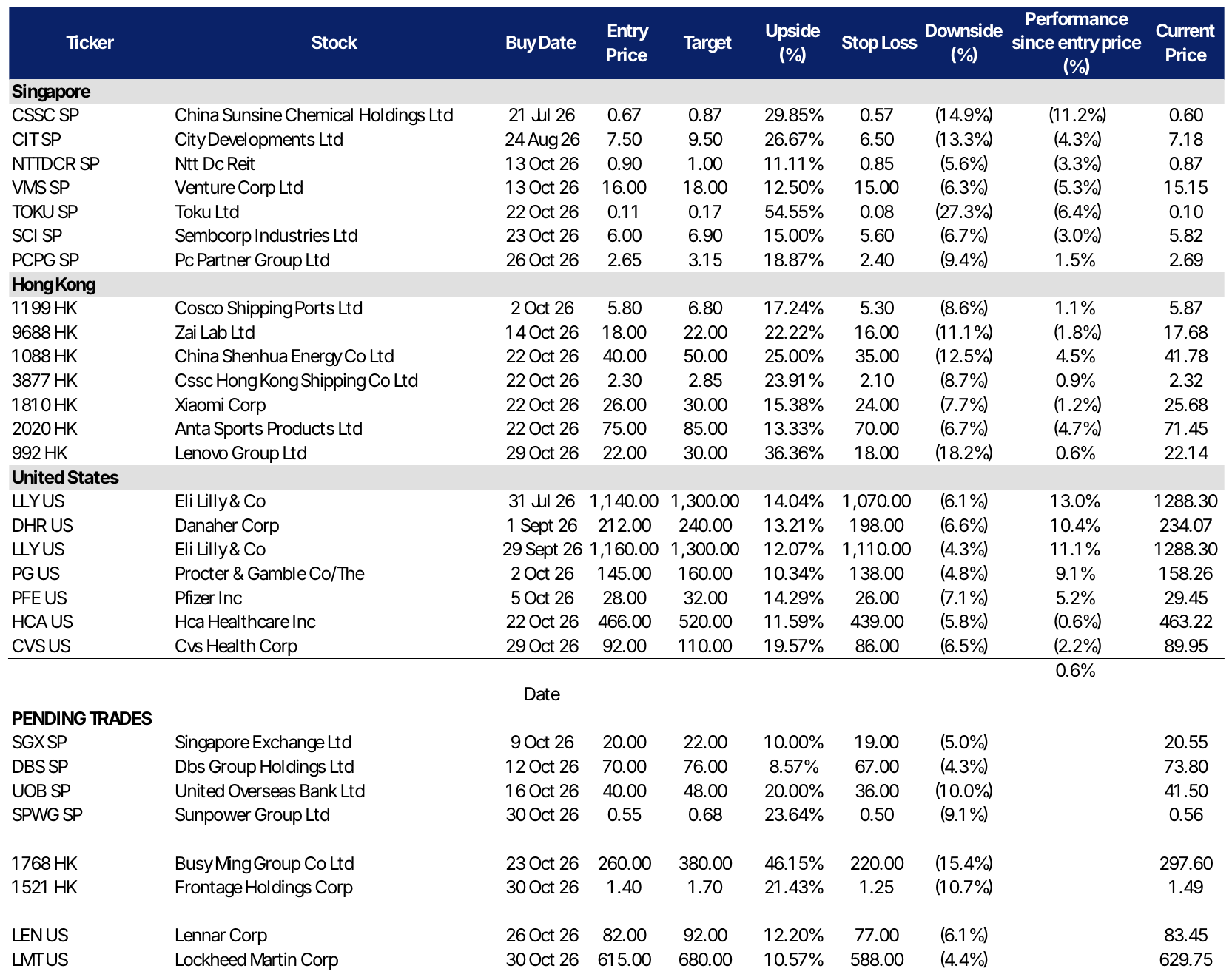

SPWG SP
Steam-volume growth, margin normalisation, and transaction optionality
KEY INSIGHTS #1
Industrial upgrading and environmental tightening continue to support centralised clean-steam demand
China’s continued relocation of industrial activity into designated industrial parks, tighter environmental standards and replacement of smaller inefficient boilers structurally favour centralised utility providers such as Sunpower. This is already translating into volumes: 1H26 total steam sales rose 12.7% YoY to 6.56M tonnes, including 13.1% growth in industrial steam, while GI recurring revenue increased 8.5% to RMB1.70B. With industrial steam a non-discretionary input for Sunpower’s diversified customer base, utilisation growth across existing plants provides a relatively defensive source of topline expansion even amid a softer Chinese macro environment.
KEY INSIGHTS #2
Ongoing confidential transaction discussions create a meaningful corporate-action catalyst
Sunpower first disclosed in August that confidential discussions were underway regarding a potential transaction involving the company’s ordinary shares. The board subsequently confirmed on 11 October that discussions remain ongoing, although no specific transaction has been agreed and there is no assurance that one will materialise. This introduces a potentially significant takeover or strategic-transaction catalyst on top of the operating recovery. At around S$0.565, the stock trades at roughly 8x trailing earnings and around book value, while remaining below its S$0.675 52-week high. An entry around S$0.55 provides a reasonable risk-reward for a move toward S$0.68 if margins recover and the transaction discussions progress.

PCPG SP
GPU pricing power, AI-server ramp, and valuation reset
KEY INSIGHTS #1
AI-driven component shortages continue to support GPU pricing despite weaker consumer volumes
Graphics-card supply remains exceptionally tight as AI infrastructure absorbs memory and semiconductor capacity. PC Partner previously guided that VGA availability would deteriorate further in 2H26, particularly at the entry level, while rising GDDR6/GDDR7 costs should continue pushing ASPs higher. That thesis remains intact in October: RTX 50-series retail prices remain materially above launch levels and industry checks continue to show severe memory constraints. In 1H26, PC Partner’s own-brand VGA ASP already increased 10.7% YoY, while ODM/OEM ASP surged 181%, allowing group revenue to grow despite sharply lower unit volumes.
KEY INSIGHTS #2
AI servers have moved from optionality into a meaningful 2H26 revenue contributor
Management now targets GPU servers at more than 15% of 2H26 revenue, a substantial upgrade from expectations earlier in the year that server contribution would remain minimal. PC Partner’s product portfolio includes the 6U ZRS-326SV2 eight-GPU server and 4U ZRS-MGX-R1 built around NVIDIA MGX, RTX PRO 6000 Blackwell Server Edition GPUs and ConnectX-8 networking. The opportunity is not yet equivalent to rack-scale HGX or NVL systems, but even moderate adoption among system integrators and enterprise customers materially expands PC Partner’s addressable market beyond consumer graphics cards and provides a growth bridge into FY27.

1521 HK
CRO recovery, contract backlog growth, and takeover optionality
KEY INSIGHTS #1
Biopharma R&D recovery is translating into accelerating contract wins
Frontage’s 1H26 revenue increased 17.1% YoY to US$148.2M, while adjusted EBITDA rose 22.8% to US$34.5M and adjusted net profit surged 74.0% to US$13.4M. More importantly, contracted future revenue reached US$543.2M at June, +34.2% YoY, materially ahead of current revenue growth and providing stronger visibility into 2H26 and FY27. North America and Europe revenue increased 7.8%, while China revenue grew 43.6% in constant currency as utilisation recovered and the Teddy Lab acquisition contributed. This suggests the CRO cycle is moving from stabilisation toward renewed growth.
KEY INSIGHTS #2
The unexplained Takeovers Code suspension creates a potentially significant corporate-action catalyst
Frontage requested a trading halt from 9:00am on 22 October specifically pending an announcement under Hong Kong’s Code on Takeovers and Mergers containing inside information. No consideration, buyer or transaction structure has been disclosed as of 29 October, meaning the event remains binary. The setup is nevertheless notable because controlling shareholder Hangzhou Tigermed already holds approximately 64.6% of Frontage, making a parent-led privatisation or other control transaction one plausible scenario, although this has not been confirmed. The last traded price was HK$1.49, already near the 52-week high, so I would not chase a large reopening gap. The better setup is below HK$1.45 if the transaction announcement does not already establish a higher cash offer price.

992 HK
AI-server scale, margin transformation, and post-selloff earnings catalyst
KEY INSIGHTS #1
AI infrastructure is becoming a genuine second earnings engine beyond PCs
Lenovo’s Infrastructure Solutions Group is benefiting directly from accelerating AI training and inference investment. In 1QFY27, ISG revenue surged 98% YoY to a record US$8.5B, while operating profit reached US$777M and operating margin expanded to a record 9.1%. Its AI-server pipeline also increased 157% QoQ to US$54B. Product momentum remains strong, with Lenovo now supporting NVIDIA’s full Vera Rubin rack-scale platform and expanding its Hybrid AI Factory offering for enterprise and sovereign-AI workloads. This materially reduces the investment case’s historical dependence on the PC replacement cycle.
KEY INSIGHTS #2
The 25% October collapse has reset expectations ahead of 19 November earnings
Lenovo has fallen from HK$28.06 on 16 October to HK$22.40 on 23 October, including a 10.9% decline on 22 October. The selloff reflected broader Hong Kong tech weakness, concerns around a US$2B loan refinancing, weaker PC shipment data and Citi cutting its target to HK$40 because of potential dilution from outstanding convertible bonds and warrants, while retaining a Buy rating. The important point is that none of these developments currently represents an operational earnings downgrade. With 2QFY27 results due on 19 November, confirmation that ISG margins remain elevated and AI-server demand continues converting would be enough to drive a partial reversal of the recent de-rating toward HK$28.

LMT US
Missile-defense and F-35 prime leveraged to allied rearmament
KEY INSIGHTS #1
Air-defense replenishment and higher NATO spending create a multi-year demand cycle
Global defense spending is moving structurally higher as the U.S. and its allies rebuild missile inventories and expand layered air and missile-defense capabilities. NATO members have committed to spend 5% of GDP on defense and defense-related investment by 2035, while European Allies and Canada already increased combined real defense expenditure by nearly 20% in 2025; this creates a particularly strong backdrop for Lockheed’s PAC-3 MSE and THAAD interceptors as governments replenish stocks and expand air-defense capacity.
KEY INSIGHTS #2
Record backlog and multiyear awards materially improve revenue visibility
Lockheed’s execution is increasingly backed by long-duration contracts, with 3Q26 sales rising 11% YoY to US$20.7bn and backlog reaching a record US$292bn, including US$52.5bn tied to the PAC-3 MSE multiyear award. PAC-3 production capacity is targeted to more than triple toward 2,000 interceptors annually, THAAD capacity is planned to rise from 96 to 400 per year, while the new F-35 framework covers 850 U.S. aircraft over 10 years plus sustainment and international orders, materially improving production and aftermarket visibility if fully contracted.

LEN US
Rate sensitivity, asset-light execution, and Berkshire accumulation
KEY INSIGHTS #1
Falling Treasury yields provide an immediate catalyst for a deeply rate-sensitive housing sector
US housing affordability remains difficult, with 30-year mortgage rates still above 7%, forcing builders to use price reductions, mortgage-rate buydowns and closing-cost incentives to maintain volumes. However, the 10-year Treasury yield fell 17bps to 4.95% on 22 October, triggering a 4.7% rally in the US home-construction ETF and an 8.7% jump in Lennar to US$84.45. Lennar is particularly leveraged to any sustained decline in financing costs because affordability, rather than underlying desire to purchase homes, remains the primary constraint on demand. Even modest mortgage-rate relief could reduce the approximately 12% incentives currently embedded in Lennar’s average selling price and eventually support margin recovery.
KEY INSIGHTS #2
Berkshire has built a 12.5% stake near current levels, creating unusually strong valuation support
Berkshire Hathaway accumulated Lennar aggressively through September and early October, reaching beneficial ownership of 26.0M Class A shares, or 12.5% of the class, as of 30 September. Purchases continued around US$79–82 even as housing conditions weakened, providing a meaningful external validation of long-term value around the current trading range.
STOCKS
–
STOCKS
STOCKS