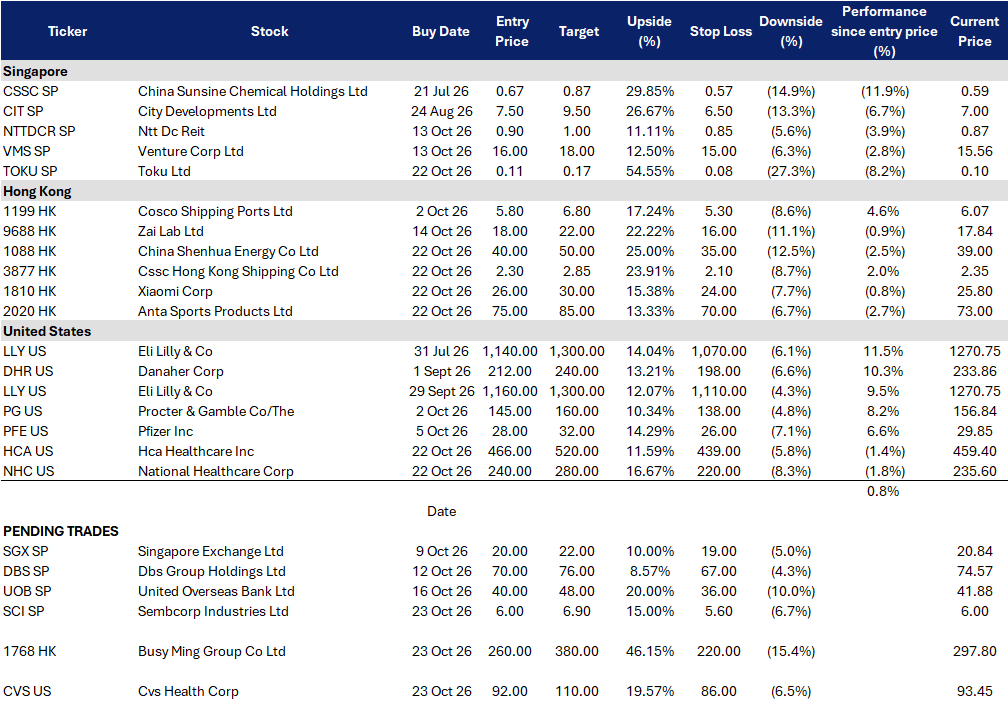

SCI SP
Alinta earnings uplift, AI-power demand, and India renewables value unlock
KEY INSIGHTS #1
AI and data-centre power demand are strengthening Sembcorp’s integrated energy proposition.
Electricity demand from data centres and AI infrastructure is increasingly becoming a structural growth driver across Singapore and the wider region, favouring generators capable of providing both reliable baseload power and low-carbon electricity. Sembcorp’s Singapore portfolio remains highly contracted, with around 80% of contracted load secured for five years or longer, reducing exposure to near-term power-price volatility. The group has also received conditional approval for a 300MW renewable-power import project from Malaysia, supported by a planned 2.2GWp floating-solar development and up to 4.3GWh of battery storage in Johor. This strengthens Sembcorp’s positioning as Singapore seeks more electricity supply for energy-intensive industries.
KEY INSIGHTS #2
A potential India renewables IPO could crystallise hidden portfolio value.
In August, wholly owned Sembcorp Green Infra filed a draft red herring prospectus with SEBI, NSE and BSE for a potential Indian IPO. The transaction is not guaranteed to proceed, but a listing could establish a transparent market valuation for Sembcorp’s sizeable Indian renewables platform while providing another avenue for capital recycling and growth funding. At around S$6.04, U96 trades near 10.4x forward earnings and well below its S$7.20 52-week high. A successful India value-unlock alongside stronger 2H26 earnings could support a rerating toward S$6.90.

TOKU SP
Revenue acceleration, AI-CX adoption, and operating leverage
KEY INSIGHTS #1
Enterprise AI adoption is moving from experimentation into customer-service deployment.
Toku is positioned at the intersection of enterprise communications and applied AI, where companies are increasingly embedding AI directly into contact-centre workflows. Recent partnerships strengthen this positioning: Toku expanded its Zoom relationship in October to provide carrier-grade connectivity for Zoom Contact Center across 14 Asia-Pacific markets, while its Core42 partnership enables deployment on sovereign cloud infrastructure in the UAE. These partnerships broaden distribution and strengthen Toku’s competitive position in regulated markets where connectivity, data residency and compliance create meaningful barriers to entry.
KEY INSIGHTS #2
FY26 guidance has been raised sharply as 2H26 conversion accelerates.
Management has upgraded FY26 revenue growth guidance to above 20%, a material step-up from its July outlook that only called for 2H26 growth to exceed the 13.0% achieved in 1H26. Given FY25 revenue of US$34.8M, the new guidance implies FY26 revenue above approximately US$41.8M and, after US$18.8M generated in 1H26, requires 2H26 revenue growth of more than 26%. This suggests commercial conversion has accelerated materially since the half-year results rather than merely tracking management’s earlier expectations. Importantly, the order book reached approximately US$35.4M at end-September, +20.8% from June and +51.3% from the IPO Offer Document, providing tangible support for the upgraded outlook.

1768 HK
Store-network expansion, margin scaling, and valuation reset
KEY INSIGHTS #1
Value-for-money consumption is supporting rapid expansion despite weak discretionary spending.
China’s consumer environment remains soft, but this is actually supportive for Busy Ming’s value-retail proposition as consumers trade down toward lower-priced snacks and beverages rather than eliminate consumption altogether. 1H26 revenue surged 60.0% YoY to RMB45.0B, while network GMV reached RMB63.9B. Store count increased from 21,948 at end-2025 to 26,405 by June, with 4,590 franchise stores opened against only 121 closures during the half. Around 60% of stores are already located in counties and townships, yet Busy Ming covers only around 79% of China’s counties, leaving further penetration potential in lower-tier markets.
KEY INSIGHTS #2
The sharp October correction has materially reset the valuation despite no corresponding earnings reset
Busy Ming closed at HK$305.40 on 21 October after falling almost 10% on 20 October alone and is now roughly 34% below its HK$465.60 post-listing high. The correction has occurred despite the strong 1H26 earnings trajectory, while published analyst targets remain substantially higher, with even the lower end of recent consensus around HK$430 and the median above HK$500. The key risk is that aggressive store expansion eventually cannibalises franchisee economics, so same-store productivity and store closures need monitoring. However, around HK$300, the valuation reset provides a much cleaner entry for a recovery toward HK$380 if 2H26 demonstrates that rapid network expansion can coexist with stable store economics and continued margin gains.
2020 HK
Multi-brand resilience, outdoor growth, and PUMA optionality
KEY INSIGHTS #1
Premium outdoor and specialist sports remain the strongest pockets of China sportswear demand.
China’s overall consumer environment remains competitive, but ANTA continues to outperform through categories where participation and premiumisation remain structurally stronger, including outdoor, running, racquet sports and technical apparel. 1H26 group revenue rose 12.9% YoY to RMB43.51B and operating profit increased 16.1% to RMB11.76B, while gross margin expanded 0.5ppt to 63.9%. Management continues to target low-single-digit retail growth for ANTA, mid-single-digit growth for FILA and 20–25% growth for the Other Brands portfolio, highlighting that premium outdoor brands remain the main growth engine despite softer near-term consumption.
KEY INSIGHTS #2
Completion of the PUMA investment creates a major globalisation rerating catalyst.
ANTA completed the acquisition of a 29.06% stake in PUMA on 7 October for EUR1.51B, making it PUMA’s largest shareholder. The strategic opportunity is significant: ANTA can apply the multi-brand operating playbook previously demonstrated with FILA and its outdoor portfolio to a global sports brand whose China exposure remains relatively underdeveloped. ANTA has said it intends to preserve PUMA’s independent brand identity rather than pursue a full takeover, limiting near-term integration risk while retaining substantial turnaround upside. With 2020 HK around HK$71 versus DBS’s HK$112 target and broader analyst targets above HK$100, an entry around HK$70 offers attractive risk-reward if PUMA execution improves and the premium-brand portfolio continues compounding.

CVS US
Aetna margin recovery, guidance upgrades, and 2027 earnings visibility
KEY INSIGHTS #1
Medicare Advantage economics are improving as pricing catches up with elevated medical costs.
The key industry concern has been elevated utilisation across Medicare Advantage, but CVS is showing increasingly convincing evidence that its Aetna remediation is working. Health Care Benefits adjusted operating income reached US$2.43B in 2Q26 versus US$1.31B a year earlier, while the medical benefit ratio improved 250bps to 87.4%. Management attributed the improvement partly to disciplined pricing and stronger Medicare medical-cost management. Quality remains supportive as well, with 69% of Aetna’s Medicare Advantage members enrolled in plans rated four stars or higher in the 2027 CMS ratings, helping protect future bonus economics and member retention.
KEY INSIGHTS #2
Management has already established a US$8.44 floor for 2027 EPS ahead of 3Q26 earnings.
CFO Brian Newman described US$8.44 of 2027 adjusted EPS as a reasonable floor, equivalent to roughly 13% growth from CVS’s underlying 2026 earnings baseline, while reaffirming confidence in its longer-term mid-teens EPS CAGR framework. The next catalyst is 3Q26 earnings on 4 November, where investors will focus on whether Aetna’s medical-cost improvement persists and whether management formalises a stronger 2027 outlook. At around US$94, CVS trades at roughly 11–12x forward earnings versus a current analyst target near US$115, leaving room for further rerating if the insurance turnaround proves sustainable.

NHC US
Reimbursement tailwind, occupancy recovery, and real-estate ownership uplift
KEY INSIGHTS #1
Medicare reimbursement remains supportive as occupancy continues recovering
CMS increased FY27 Skilled Nursing Facility Medicare payment rates by 2.4%, effective 1 October 2026, adding an estimated US$883M of payments across the industry. NHC is already seeing improving fundamentals: skilled-nursing occupancy reached 90.1% in 2Q26 versus 89.4% a year earlier, while Medicare and managed-care per diem rates increased 2.2% and 2.9%, respectively. Tennessee Medicaid reimbursement increases should additionally contribute around US$2M of annual revenue. With skilled nursing still constrained by labour availability and bed supply, higher occupancy combined with reimbursement increases provides a favourable backdrop for same-facility revenue growth.
KEY INSIGHTS #2
The US$560M NHI transaction converts a large rental burden into owned real estate
On 1 July, NHC acquired the real estate underlying 32 skilled nursing facilities and three independent-living facilities from National Health Investors for US$560M, terminating the existing master lease. Importantly, NHC already operated almost all these facilities, substantially reducing integration risk versus a conventional acquisition. Management expects ownership to be accretive to earnings and cash flow over time, although the deal introduces higher leverage through a new US$475M term loan. The transaction therefore shifts NHC from being partially a tenant to owning a much larger share of its operating asset base, providing greater control over facilities and potentially stronger long-term economics.
STOCKS
–
STOCKS
STOCKS