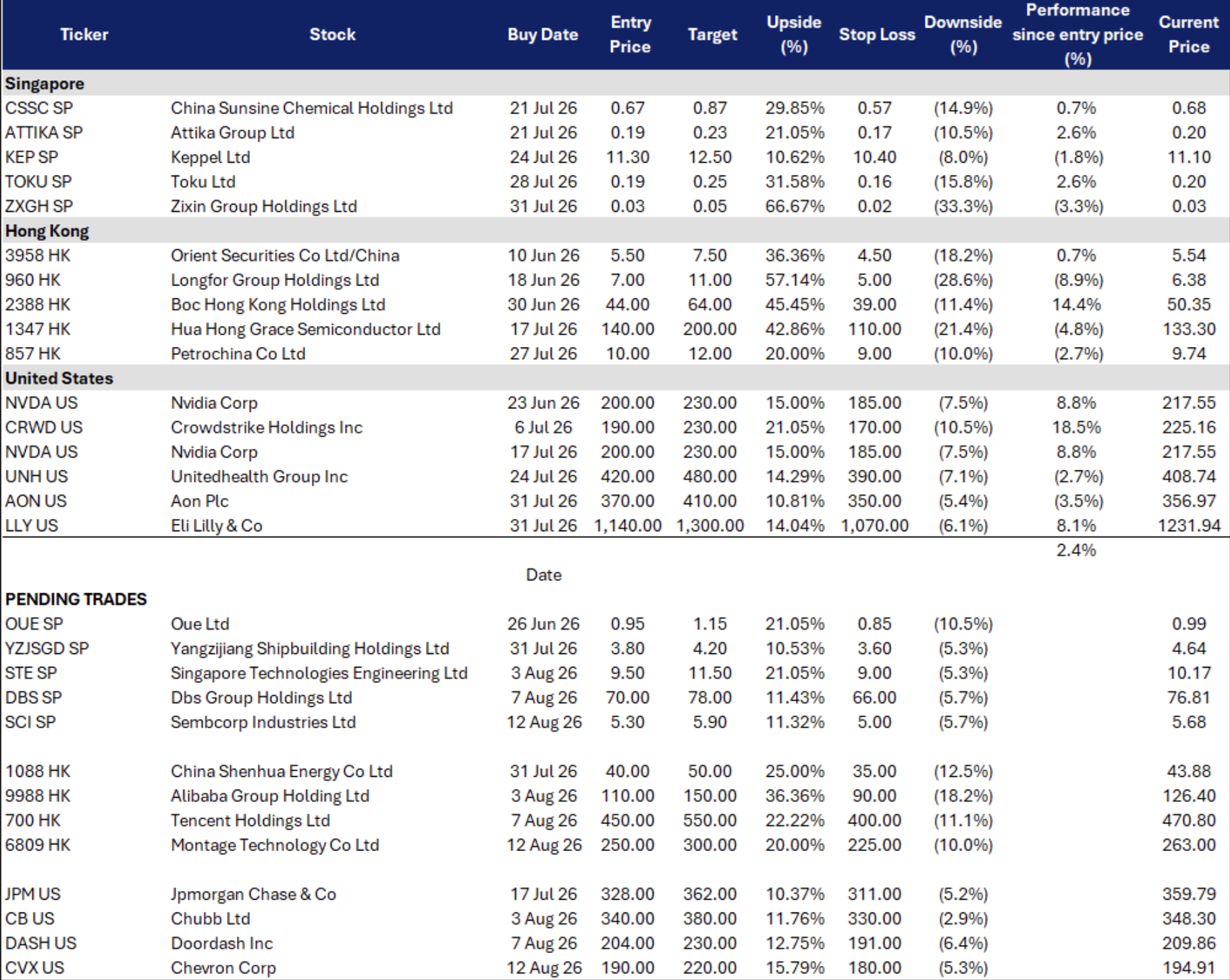

SCI SP
Alinta is the rerating catalyst, but 13 Aug results are the immediate binary
KEY INSIGHTS #1
Alinta transforms Sembcorp from a Singapore-centric generator into an Australia growth platform.
The A$6.5bn Alinta acquisition completed on 11 June, adding 3.4GW of operating generation and 10.4GW of development pipeline. Australia is now effectively Sembcorp’s second core market. The attraction is not simply buying another utility. Alinta combines retail customers, dispatchable generation and a substantial renewables/firming pipeline. That gives Sembcorp exposure to Australia’s structural need for batteries, renewables and firm generation as coal exits the system.
KEY INSIGHTS #2
Singapore gas weakness looks increasingly priced in; Alinta changes the earnings bridge.
FY25 Gas & Related Services underlying profit fell 4% to S$701m, with weaker UK performance and narrower Singapore generation spreads. Management has also warned that newly contracted Singapore gas volumes face lower margins in 2026. That is why the stock has struggled despite continued renewable growth. The important shift is that from 2H26 onward, investors should increasingly model.

DBS SP
Wealth-led earnings resilience, AI productivity, and capital returns
KEY INSIGHTS #1
Wealth management has become the primary earnings engine, reducing reliance on NIM.
DBS is no longer purely a “higher rates” story. Wealth management, treasury customer sales and transaction banking are driving a larger share of earnings. In 1Q26, the bank reported record total income of S$5.95B and record wealth fees of S$907M, supported by S$10B of net new money inflows. This improves earnings quality and makes DBS less dependent on interest-rate movements than regional peers.
KEY INSIGHTS #2
AI is becoming a measurable profit driver rather than just a technology investment.
DBS expects AI initiatives to generate over S$1B of annual economic impact by 2027, up from around S$750M in 2025. AI is already being deployed across customer service, software development, fraud detection, risk management and internal productivity. Unlike many banks that discuss AI in qualitative terms, DBS is providing quantified financial targets, giving investors another medium-term earnings growth driver beyond loan expansion.

6809 HK
AI memory-bandwidth bottleneck, DDR5 interface dominance, and new interconnect products driving margin expansion
KEY INSIGHTS #1
AI servers are creating a memory-bandwidth bottleneck.
AI server architecture increasingly requires higher memory capacity and bandwidth alongside GPU compute. That drives migration toward newer DDR5 generations and higher-performance memory architectures such as MRDIMM. Montage’s 1Q26 results already show this transition. Shipments of DDR5 RCD increased significantly, with Gen3 and Gen4 taking a larger proportion of the mix. Revenue from MRCD/MDB, PCIe Retimer, CKD and CXL MXC also increased materially. The next step is faster DDR5. Montage began sampling a 9,200 MT/s DDR5 RCD in June, following mass production of Gen4 DDR5 RCD last year.
KEY INSIGHTS #2
PCIe/CXL opens another AI interconnect TAM beyond memory modules.
Montage launched its PCIe 6.x/CXL 3.x Active Electrical Cable solution in January, using its own PCIe Retimer technology to connect CPUs, GPUs, NICs and storage across increasingly complex AI data-centre architectures. This is strategically important. The original Montage thesis was predominantly DDR memory-interface silicon. The emerging opportunity encompasses memory expansion, retimers, clocking and high-speed electrical interconnect.

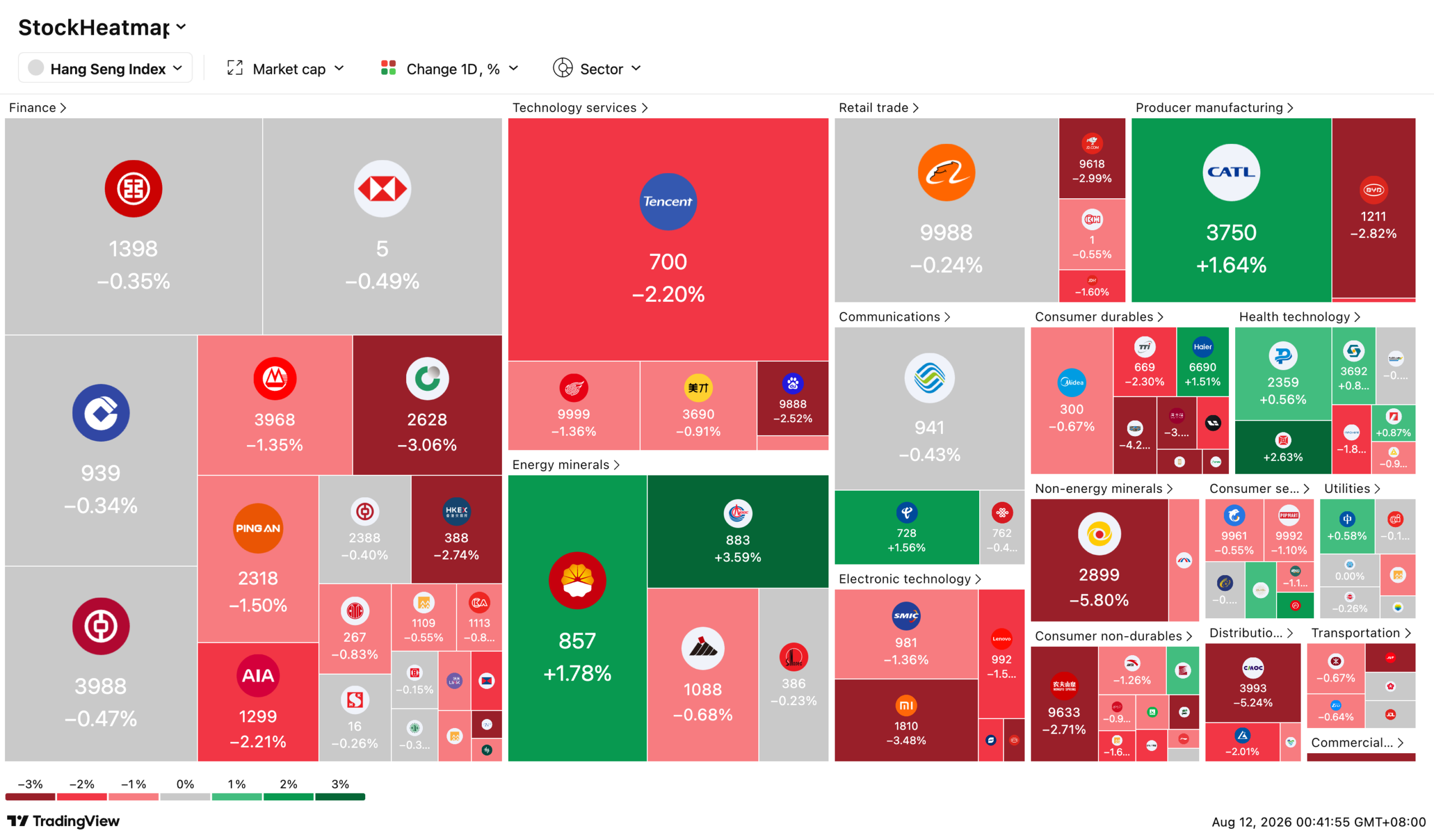
0700 HK
AI monetisation inflection, advertising flywheel, and gaming resilience
KEY INSIGHTS #1
AI is now lifting every business, not creating a new one.
Tencent is one of the few global internet companies where AI is already improving the economics of its core businesses. Management highlighted AI-enhanced advertising, cloud services, enterprise software and WeChat ecosystem products as the primary investment focus. Rather than building a separate AI revenue stream, Tencent is embedding AI into products that already generate hundreds of billions of RMB annually. This creates a much clearer monetisation pathway than many AI peers. Advertising remains one of the biggest beneficiaries as recommendation algorithms and AI-generated creative continue to improve advertiser ROI.
KEY INSIGHTS #2
Gaming is stronger than the market appreciates.
Gaming remains Tencent’s largest profit engine. Domestic gaming has benefited from evergreen franchises such as Honor of Kings together with improving monetisation from newer titles, while international games continue expanding through Supercell, Riot Games and other global studios. Unlike most publishers, Tencent combines premium PC titles, mobile gaming and global IP ownership, making earnings significantly more diversified. Gaming cash flows continue funding AI investment without materially weakening profitability.

CVX US
Hess integration is outperforming, record production, and oil-price upside is flowing straight into FCF
KEY INSIGHTS #1
Oil backdrop + Guyana/Tengiz give Chevron unusually strong volume and commodity-price torque.
Chevron just delivered 4.07mmboe/d of 2Q26 production, +20% YoY, with U.S. production reaching a record. The increase was driven largely by the Hess assets alongside continued Permian and Gulf of America growth. This is particularly attractive in the current elevated-oil environment. Higher commodity prices were a major contributor to Chevron’s 2Q earnings surge, while Tengiz distributions and higher production materially strengthened cash generation.
KEY INSIGHTS #2
Hess is already exceeding the acquisition underwriting.
Chevron has achieved US$1.5B of annual run-rate Hess synergies, already 50% above the original US$1B target, within one year of closing. That makes the Hess acquisition increasingly difficult to frame as simply an expensive Guyana purchase. Chevron acquired a portfolio of low-cost barrels and is extracting more cost savings than initially promised. At the same time, Chevron reached US$3B of structural annual run-rate cost reductions six months ahead of schedule, against its US$3–4B end-2026 objective.

DASH US
Local-commerce platform expanding beyond restaurant delivery
KEY INSIGHTS #1
Broader verticals and logistics innovation deepen platform value.
DoorDash is evolving from a food-delivery app into a broader local-commerce platform spanning groceries, convenience goods and retail. Its direct Shopify integration allows eligible U.S. brick-and-mortar merchants to synchronise products and inventory with DoorDash, while DashPass supports order frequency and customer retention. DoorDash Air’s FAA Part 135 certification also creates longer-term potential to improve delivery speed and unit economics on suitable routes, although commercial deployment will remain gradual.
KEY INSIGHTS #2
Convenience spending remains resilient despite consumer uncertainty.
Consumers continue to prioritise convenience for meals, groceries and daily essentials, supporting recurring delivery demand even in an uncertain spending environment. This helped DoorDash’s 2Q26 Marketplace GOV rise 36% YoY to US$33.08bn, while adjusted EBITDA increased 40% to US$914mn, demonstrating that category expansion and greater platform scale can support both growth and improving profitability.
STOCKS
STOCKS
–
STOCKS
–