
United States | Singapore | Hong Kong | Earnings

GameStop Corporation (GME US)
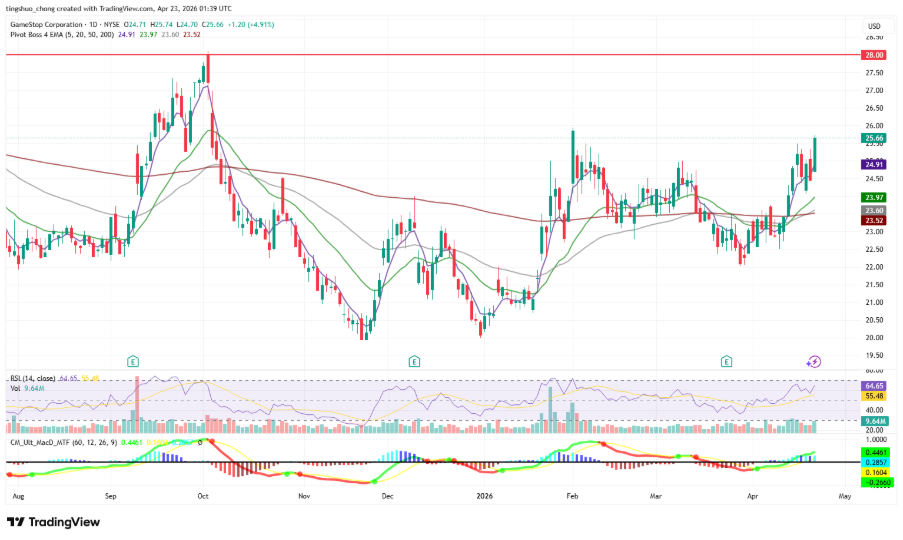
- Shares closed above the 5dEMA with rising volume.
- RSI is near overbought levels, but MACD is still constructive.
- Long – Entry 25.0, Target 28.0, Stop 23.5

Carvana Co. (CVNA US)
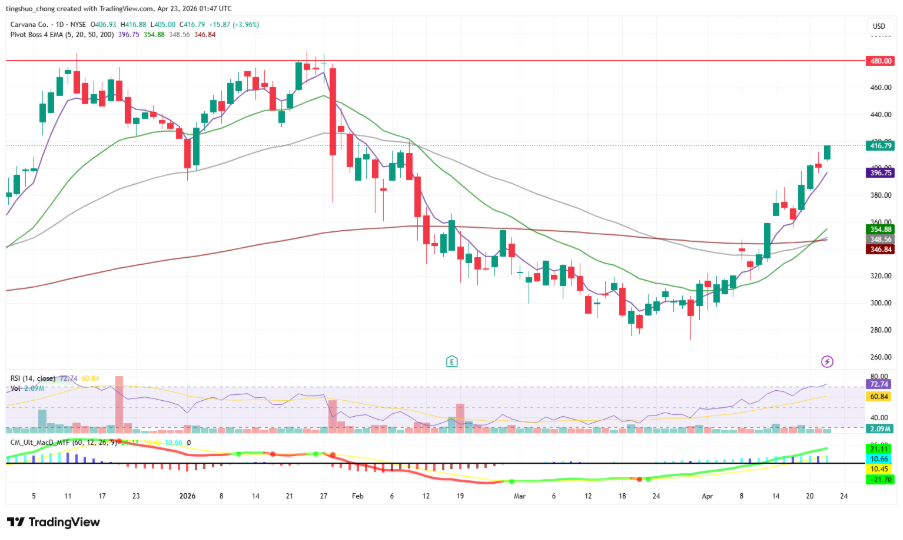
- Shares closed above the 5dEMA.
- RSI is at overbought levels, but MACD is still constructive.
- Long – Entry 400, Target 480, Stop 360


Ley Choon Group Holdings Ltd. (LEY SP)
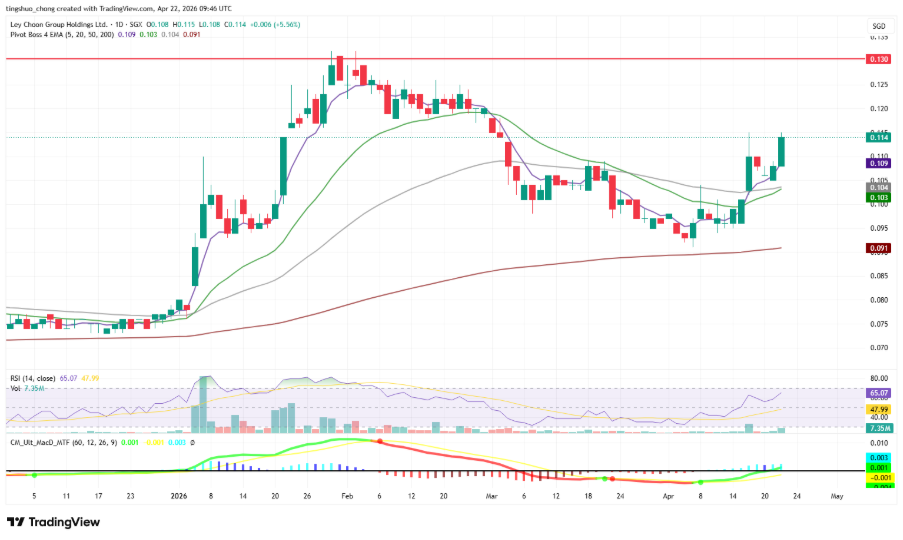
- Shares closed above the 5dEMA with rising volume.
- Both RSI and MACD are constructive.
- Buy – Entry 0.11, Target 0.13, Stop 0.10

Trendlines Group Ltd. (TTGL SP)
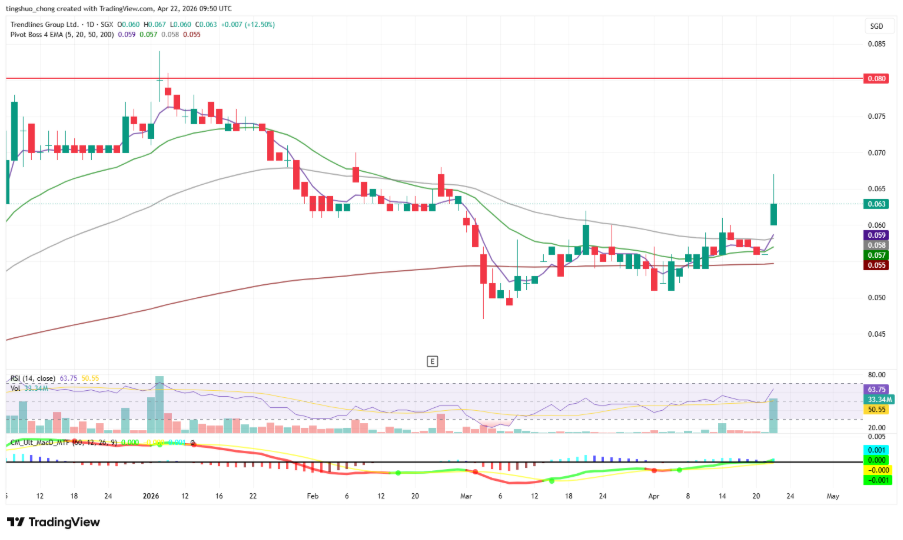
- Shares closed above the 5dEMA with elevated volume
- Both RSI and MACD are constructive.
- Buy – Entry 0.06, Target 0.08, Stop 0.05


China Resources Power Holdings Co. Ltd. (836 HK)
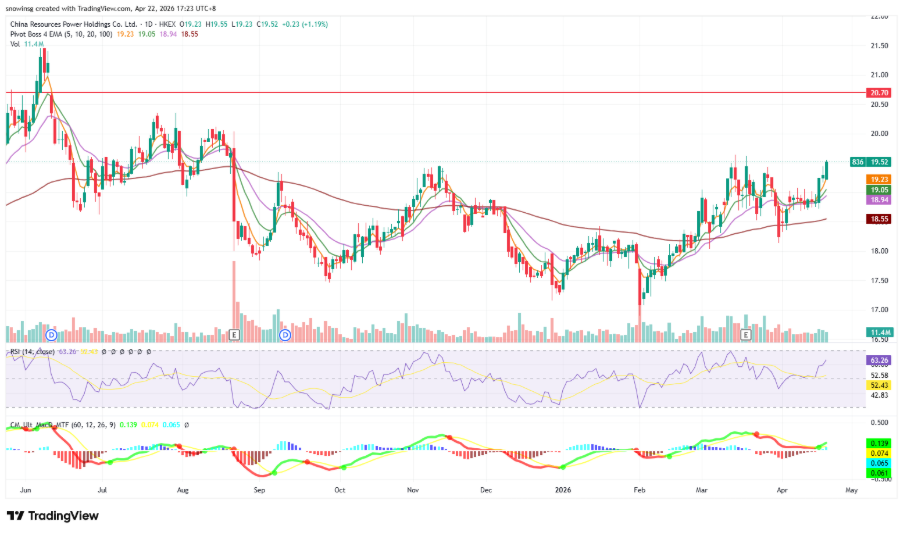
- Shares closed at an eight-month high above the 5dEMA.
- Both RSI and MACD are constructive.
- Long – Entry 19.3, Target 20.7, Stop 18.6
CGN Power Co., Ltd. (1816 HK)
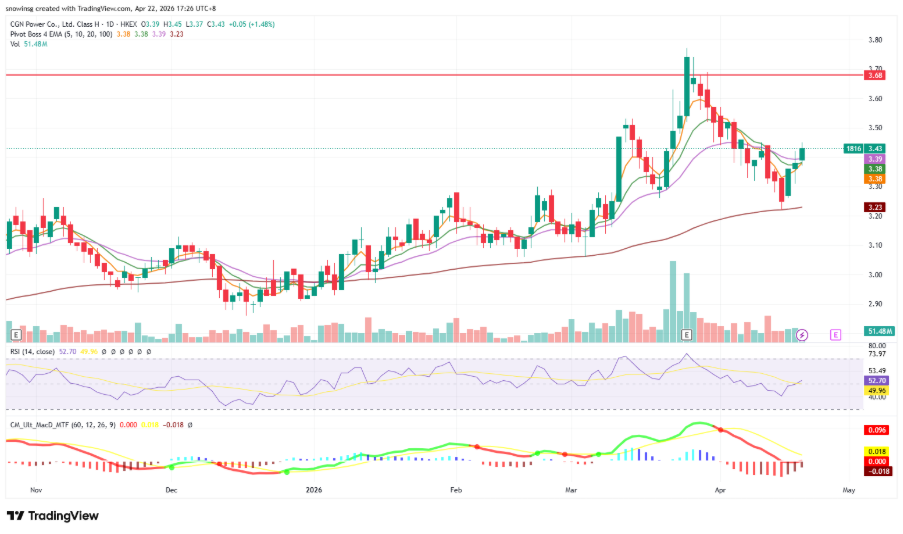
- Shares closed above the 20dEMA. The 5dEMA crossed the 10dEMA.
- RSI is constructive, while MACD is negative.
- Long – Entry 3.40, Target 3.68, Stop 3.26


Vertiv Holdings Co (VRT)
- 1Q26 Revenue: $2.65B, +29.9% YoY, in-line with estimates
- 1Q26 Non-GAAP EPS: $1.17, beat estimates by $0.16
- FY26 Guidance: Raised FY26 adjusted EPS guidance to $6.30 to $6.40 and FY26 revenue guidance to $13.5B to $14.0B.
- 2Q26 Guidance: 2Q26 revenue to about $3.25B to $3.35B, while the market reaction suggested investors wanted a stronger near-term revenue and growth profile.
- Comment: The quarter was fundamentally strong. Vertiv delivered 30% revenue growth, 23% organic sales growth, and an 83% increase in adjusted EPS, which confirms that data-center power and thermal demand remains very robust. The results also indicate that Vertiv is still converting AI-related infrastructure spending into real operating leverage rather than only backlog accumulation. Regional demand remained particularly strong in the Americas. Post-earnings coverage highlighted 44% organic sales growth in the Americas, supported by continued hyperscale and AI infrastructure buildout. Europe, Middle East, and Africa also improved, which matters because it broadens the growth story beyond one geography. The strategic positioning remains attractive. Vertiv continues to benefit from direct-to-chip liquid cooling demand and broader power-management requirements tied to AI compute clusters. Vertiv’s Nvidia partnership is a meaningful factor reinforcing its role in the AI data-center stack. The principal issue was not the print itself, but expectations and disclosure. Despite the beat and raise, the stock fell because expectations were already elevated after a very strong run, investors were concerned about somewhat lower organic growth assumptions in the Americas, and Vertiv stopped reporting quarterly backlog, which reduced visibility for some market participants. Shares fell roughly 2% to 5% despite the beat-and-raise quarter. The market reaction suggests investors were positioned for an even stronger acceleration, particularly given the stock’s very sharp year-to-date gain heading into results. The operating setup remains constructive. Vertiv is executing well, AI data-center demand remains strong, and management raised full-year guidance. However, the stock is now trading against a high-expectations backdrop, and the removal of backlog disclosure slightly reduces external visibility into forward demand conversion. The principal variables to monitor are Americas growth normalization, liquid-cooling adoption, margin conversion as capacity expands, and whether second-half growth remains strong enough to justify the current valuation. 2Q26 recommended trading range: $280 to $400. Positive Outlook.
Vertiv Holdings Co(VRT)
- 26财年第一季度营收:26.5亿美元,同比增长29.9%,符合市场预期
- 26财年第一季度非公认会计准则每股收益:1.17美元,超出预期0.16美元
- 26财年全年指引:上调全年调整后EPS至6.30–6.40美元;上调全年营收指引至135亿–140亿美元
- 26财年第二季度指引:营收约32.5亿–33.5亿美元;市场反应显示投资者期待更强劲的近期增长轮廓
- 短评:本季度基本面强劲。公司实现营收增长30%、有机销售增长23%、调整后EPS大增83%,确认数据中心电源与热管理需求持续旺盛,且Vertiv正将AI基础设施支出有效转化为真实运营杠杆,而非仅积累订单 backlog。区域表现突出:美洲市场有机销售增长达44%,受益于超大规模云厂商及AI算力集群持续建设;欧洲、中东和非洲(EMEA)亦改善,使增长故事不再局限于单一地区。战略定位具吸引力:公司持续受益于面向AI芯片的直接到芯片液冷(direct-to-chip liquid cooling)需求及高密度算力对先进电力管理的要求;与英伟达(Nvidia)的合作进一步巩固其在AI数据中心供应链中的关键角色。然而,市场反应偏负面:尽管业绩超预期且上调全年指引,股价仍下跌2%–5%,主因三重因素——(1)财报前股价已大幅上涨,市场预期过高;(2)美洲市场未来有机增长假设略低于部分投资者乐观预期;(3)公司停止披露季度 backlog 数据,削弱了外部对前瞻需求转化的可见性。当前运营格局依然积极:执行稳健、AI数据中心需求强劲、全年指引上调。但股价现处于高预期环境,且信息透明度略有下降。后续关键变量包括:(1)美洲增长是否温和回归常态;(2)液冷技术采纳速度;(3)产能扩张下的利润率转化效率;(4)下半年增长能否维持足够强度以支撑当前估值。26财年第二季度建议交易区间:280美元至400美元。积极前景。
GE Vernova Inc. (GEV)
- 1Q26 Revenue: $9.34B, +16.3% YoY, beat estimates by $90M
- 1Q26 GAAP EPS: $17.44, beat estimates by $15.44
- FY26 Guidance: Raised FY26 revenue guidance to $44.5B to $45.5B, raised adjusted EBITDA margin guidance to 12% to 14%, and market coverage indicated FY26 free cash flow guidance was also raised to $6.5B to $7.5B.
- Comment: The quarter was very strong on both growth and orders. Revenue rose 16% YoY to $9.34B, while total orders increased 71% to $18.3B. Backlog reached $163B, which materially strengthens medium-term visibility and supports management’s confidence in raising full-year guidance. The most important driver was electrification and power demand tied to data-center and AI buildout. GE Vernova booked $2.4B of data-center-related orders in the quarter, more than it secured from that end market in all of the prior year. Power segment profit rose 57%, while Electrification profit more than doubled, indicating that demand is not only strong at the order level but is also converting into operating leverage. This is strategically important because GE Vernova sits in one of the clearest infrastructure bottlenecks of the current AI cycle. Gas turbines, grid equipment, and broader electrification capacity are becoming necessary complements to hyperscale data-center expansion. The acceleration in backlog and management’s indication that it expects to reach roughly $200B of backlog by 2027, a year ahead of prior expectations, reinforces that point. The main weak spot remains wind. Wind revenue fell 23% and the segment posted a larger loss of $382M due to slower onshore turbine deliveries. In addition, the company still faces tariff-related costs of roughly $250M to $350M in 2026. That means the bull case is increasingly centered on power and electrification strength more than on a broad-based recovery across all segments. A second caution is earnings quality. The very large GAAP EPS figure was boosted by a one-time gain related to the Prolec GE acquisition, so the quarter should not be interpreted as a clean run-rate profit level. The more important takeaways are the raised guidance, order acceleration, and margin improvement in the core businesses. Shares reacted very strongly, rising more than 13% after the release as investors focused on the guidance raise, order acceleration, and data-center demand exposure. The setup remains highly constructive. GE Vernova is benefiting from one of the strongest structural demand environments in industrials, with tangible evidence that AI-driven electricity demand is translating into orders, backlog, and better margins. The principal variables to monitor are execution in Electrification, gas turbine reservation conversion, tariff cost recovery, and whether wind losses narrow over the next several quarters. On balance, this was a very strong quarter with a meaningful guidance raise and a favorable demand backdrop. 2Q26 recommended trading range: $1000 to $1300. Positive Outlook.
GE Vernova Inc.(GEV)
- 26财年第一季度营收:93.4亿美元,同比增长16.3%,超出预期9000万美元
- 26财年第一季度公认会计准则每股收益:17.44美元,大幅超出预期15.44美元(主要受一次性收益推动)
- 26财年全年指引:上调全年营收至445亿–455亿美元;上调调整后EBITDA利润率至12%–14%;据市场报道,自由现金流指引亦上调至65亿–75亿美元
- 短评:本季度在增长与订单层面表现极为强劲。营收同比增长16%至93.4亿美元,总订单激增71%至183亿美元,期末积压订单达1630亿美元,显著增强中期能见度,并支撑管理层大幅上调全年指引。核心驱动力来自数据中心与AI建设带动的电气化与电力需求:公司单季斩获24亿美元数据中心相关订单,超过2025年全年该领域的总和。电力板块利润大增57%,电气化板块利润翻倍以上,显示强劲订单正有效转化为运营杠杆。这一趋势具战略意义——GE Vernova正处于当前AI周期中最清晰的基础设施瓶颈环节之一:燃气轮机、电网设备及广义电气化能力已成为超大规模数据中心扩张的必要配套。管理层预计积压订单将在2027年达到约2000亿美元,较原计划提前一年,进一步印证需求强度。然而,风电业务仍是明显短板:营收下滑23%,板块亏损扩大至3.82亿美元,主因陆上风机交付放缓。此外,公司预计2026年仍将面临2.5亿–3.5亿美元的关税相关成本。因此,当前投资逻辑日益聚焦于电力与电气化的强势,而非全业务线复苏。另需注意,GAAP EPS含重大一次性收益(源于Prolec GE收购相关会计处理),不应视为可持续盈利水平;更关键的信号在于指引上调、订单加速及核心业务利润率改善。财报发布后股价大涨逾13%,反映市场对数据中心需求兑现、订单动能及全年指引上调的高度认可。整体格局高度积极:GE Vernova正受益于工业领域最强劲的结构性需求环境之一,且已展现AI驱动电力需求向订单、积压与利润转化的实质证据。后续关键变量包括:(1)电气化业务执行效率;(2)燃气轮机预订向收入的转化;(3)关税成本的回收能力;(4)风电亏损能否在未来几个季度收窄。综合来看,本季为高质量超预期,伴随实质性指引上调与有利需求背景。26财年第二季度建议交易区间:1000美元至1300美元。积极前景。
The Boeing Company (BA)
- 1Q26 Revenue: $22.2B, +13.8% YoY, beat estimates by $290M
- 1Q26 Non-GAAP EPS: -$0.20, beat estimates by $0.47
- 2Q26 Guidance: Management commentary pointed to improving operational momentum, continued 737 and 787 production ramp, and ongoing certification work for the 737-7, 737-10, and 777X.
- Comment: The quarter was better than feared. Boeing posted only a $7M net loss in 1Q26 versus a $31M loss a year earlier, while the core loss per share was substantially narrower than expected. The main support came from better commercial execution and a recovery in deliveries, rather than financial engineering. Commercial Airplanes remains the central driver. Reuters reported commercial jet revenue rose 13% to $9.2B, helped by Boeing’s highest first-quarter delivery volume since 2019. That matters because the investment case for Boeing still depends primarily on whether the company can convert production stabilization into sustained delivery growth and cash generation. Defense was also better. Defense and space division’s earnings rose 50% to $233M, helped in part by the Artemis II mission. This is constructive because it suggests not every segment is acting as a drag, although defense program execution remains a historical risk area for Boeing. Cash flow remains the main weak point. Boeing burned about $1.5B of cash in the quarter as it continued funding production ramp-up and certification work. That is still a material outflow, even if it is directionally better than prior crisis periods. Investors therefore still need evidence that operational recovery can translate into consistent free cash flow rather than simply smaller losses. The principal risks remain execution and supply chain. Lingering supplier constraints and higher-than-expected costs related to Spirit AeroSystems. These factors are important because Boeing’s path to rerating depends on cleaner factory execution, smoother supplier performance, and more predictable certification timelines. Shares rose about 5% after the release as investors reacted to the much smaller-than-expected loss and signs that the recovery remains on track. The quarter supports the view that Boeing is stabilizing operationally. The key question is whether this is now a true cash recovery story or still only an earnings stabilization story. The principal variables to monitor are 737 production cadence, 787 output, certification timing for the 737-7, 737-10, and 777X, and whether Spirit-related costs and supply chain issues stay contained. 2Q26 recommended trading range: $200 to $280. Neutral Outlook.
波音公司(BA)
- 26财年第一季度营收:222亿美元,同比增长13.8%,超出预期2.9亿美元
- 26财年第一季度非公认会计准则每股亏损:0.20美元,优于预期0.47美元(亏损大幅收窄)
- 26财年第二季度展望:管理层指出运营动能持续改善,737与787产量稳步爬坡,并正推进737-7、737-10及777X机型的认证工作
- 短评:本季度表现好于市场最悲观预期。公司仅录得700万美元净亏损(去年同期亏损3100万美元),核心每股亏损显著优于预期。改善主要来自商用飞机业务执行力提升与交付量回升,而非财务手段。商用飞机仍是核心驱动力:据路透社报道,商用喷气机收入增长13%至92亿美元,受益于自2019年以来最强劲的一季度交付量——这对波音投资逻辑至关重要,因其估值修复最终取决于能否将生产稳定转化为可持续的交付增长与自由现金流生成。国防与航天业务亦有贡献:板块利润大增50%至2.33亿美元,部分受益于Artemis II登月任务推进,显示并非所有部门均拖累整体表现,尽管国防项目执行历来是波音的风险领域。然而,现金流仍是主要短板:本季自由现金流净流出约15亿美元,主要用于支持产量爬坡与新机型认证。虽较危机时期有所改善,但仍是重大现金消耗。投资者仍需看到运营复苏切实转化为持续正向自由现金流,而不仅是亏损收窄。核心风险依然在于执行与供应链:Spirit AeroSystems(关键机身供应商)相关成本超预期及持续的供应商约束,仍是制约因素。波音能否重获市场信心,取决于工厂执行更干净、供应链更顺畅、认证时间表更可预测。财报发布后股价上涨约5%,反映市场对亏损远小于预期及复苏路径延续的认可。当前信号支持“运营趋于稳定”的观点,但关键问题在于:这是否已进入真正的现金回收阶段,还是仍停留在盈利企稳阶段?后续关键变量包括:(1)737生产节奏;(2)787产出效率;(3)737-7、737-10及777X的认证进度;(4)Spirit相关成本与供应链扰动是否可控。26财年第二季度建议交易区间:200美元至280美元。中性前景。
AT&T Inc. (T)
- 1Q26 Revenue: $31.5B, +2.8% YoY, beat estimates by $260M
- 1Q26 Non-GAAP EPS: $0.57, beat estimates by $0.02
- FY26 Guidance: Reaffirmed FY26 adjusted EPS guidance of $2.25 to $2.35 and full-year free cash flow guidance of at least $18B.
- Dividends/Share Buybacks: Quarterly dividend remains $0.2775 per share. Management also reiterated its plan to return at least $45B to shareholders by 2028.
- Comment: The quarter was operationally solid. AT&T delivered 294,000 postpaid phone net adds and 584,000 total broadband net adds, including 292,000 fiber net adds and 292,000 fixed wireless net adds. That supports the view that the company’s bundled wireless and broadband strategy is still working, particularly as fiber scale expands and cross-sell penetration improves. Reuters also noted that about 42% of AT&T home internet customers now take wireless service as well. The clearest area of strength was Advanced Connectivity. AT&T reported about 5% growth in that segment, driven by fiber and 5G services, while legacy copper-related operations continued to decline. This matters because the earnings story is increasingly about whether higher-quality connectivity revenue can outgrow the legacy drag with enough consistency to support cash flow expansion. The principal issue was not the headline beat, but the quality of customer retention and cash flow. Several reports highlighted wireless churn of nearly 0.9%, which was worse than some investors expected. Free cash flow also fell 19% YoY to $2.5B, largely because capital investment rose to about $5.1B as AT&T accelerated fiber deployment and integrated the Lumen consumer fiber asset acquisition. That spending is strategically sensible, but it raises the burden on execution over the next few quarters. The balance of the quarter was therefore mixed in market terms. Subscriber growth, broadband momentum, and reaffirmed guidance were supportive, but higher churn and softer near-term cash flow offset that strength. The company remains in a capital-intensive phase where investors want proof that fiber expansion can translate into durable, higher-quality free cash flow rather than only customer growth. Shares fell about 3% as investors focused on churn and a softer-than-hoped near-term cash flow setup despite the EPS beat and solid subscriber additions. The underlying business remains constructive. Fiber growth is strong, wireless adds were better than expected, and management maintained full-year EPS and free cash flow guidance. However, churn moved the wrong way, free cash flow remains back-end loaded, and the market is increasingly sensitive to whether incremental fiber investment produces superior shareholder returns. The principal variables to monitor are postpaid phone churn, fiber penetration and cross-sell rates, second-quarter cash flow conversion, and whether the Lumen fiber asset integration accelerates revenue quality. 2Q26 recommended trading range: $15 to $19. Neutral Outlook.
AT&T Inc.(T)
- 26财年第一季度营收:315亿美元,同比增长2.8%,超出预期2.6亿美元
- 26财年第一季度非公认会计准则每股收益:0.57美元,小幅超出预期0.02美元
- 26财年全年指引:重申调整后每股收益2.25–2.35美元;自由现金流至少180亿美元
- 股息与资本返还:维持季度股息每股0.2775美元;重申计划在2028年前向股东返还至少450亿美元
- 短评:本季度运营表现稳健。公司新增29.4万后付费手机用户和58.4万宽带净用户(其中光纤与固定无线各增29.2万),印证其“无线+宽带”捆绑战略持续奏效——随着光纤网络规模扩大及交叉销售渗透率提升,协同效应日益显现。据路透社报道,目前约42%的AT&T家庭互联网用户同时使用其无线服务,凸显融合套餐粘性。高级连接业务(Advanced Connectivity)成为最清晰的增长引擎:该板块收入增长约5%,由光纤与5G驱动,而传统铜缆业务继续萎缩。这标志着公司盈利故事正转向“高质量连接收入能否持续跑赢传统业务拖累”,以支撑自由现金流扩张。然而,市场关注点不在顶层超预期,而在用户留存与现金流质量。多项报告显示,无线用户流失率(churn)升至近0.9%,高于部分投资者预期;自由现金流同比下滑19%至25亿美元,主因资本支出增至51亿美元——用于加速光纤部署及整合收购的Lumen消费者光纤资产。此类投资具战略合理性,但也抬高了未来几个季度的执行门槛。因此,本季市场观感喜忧参半:用户增长、宽带动能与全年指引重申构成利好,但更高流失率与短期现金流疲软抵消了部分积极信号。公司仍处资本密集阶段,投资者亟需看到光纤扩张能转化为可持续、高质量的自由现金流,而非仅用户数量增长。财报发布后股价下跌约3%,反映市场聚焦流失率上升与现金流弱于预期,尽管EPS与用户数据亮眼。基本面仍具建设性:光纤增长强劲、无线新增超预期、全年EPS与自由现金流指引未下调。但挑战在于:流失率恶化、现金流高度后置,以及市场对光纤投资回报效率日益敏感。后续关键变量包括:(1)后付费手机用户流失率走势;(2)光纤渗透率与交叉销售深化;(3)第二季度现金流转化改善;(4)Lumen光纤资产整合能否加速提升收入质量。26财年第二季度建议交易区间:15美元至19美元。中性前景。
Tesla, Inc. (TSLA)
- 1Q26 Revenue: $22.39B, +15.8% YoY, beat estimates by $190M
- 1Q26 Non-GAAP EPS: $0.41, beat estimates by $0.06
- FY26 Guidance: Tesla increased 2026 capex guidance to more than $25B from $20B previously, reflecting heavier spending on AI, robotics, chips, and new production capacity.
- Comment: The headline quarter was mixed. EPS beat expectations and operating profit improved sharply, but revenue was slightly light and the quality of the quarter remains heavily debated because the core automotive business is still facing a softer demand backdrop. Tesla reported 358,023 deliveries in 1Q26, below analyst expectations, and produced 50,363 more vehicles than it delivered, indicating renewed inventory build. Demand remains the main issue. The U.S. EV tax credit expiry, intensifying competition, and delayed regulatory progress for full self-driving in Europe are weighing on deliveries. California registrations also fell 24.3% in 1Q26, reinforcing the view that Tesla is under pressure in one of its most important domestic markets. Management continues to push the long-duration AI and autonomy narrative. Tesla is expanding robotaxi operations from Austin into Dallas and Houston, while also increasing spending on robotics, chips, and future platforms. Strategically, this may strengthen Tesla’s long-term positioning, but it also raises the burden on execution because capex is stepping up materially before those businesses are generating meaningful earnings. There is also a margin trade-off emerging. Coverage ahead of results noted that Tesla’s lower-cost EV strategy could help support volume and factory utilization, but it also risks additional pressure on already strained automotive margins. That leaves investors balancing two competing narratives: stabilizing volume through cheaper vehicles versus preserving profitability. The immediate stock reaction was volatile. Shares initially rose about 4% before turning down about 2% to 2.4% after the earnings call as investors focused on the higher capex burden, the delayed monetization of robotaxi and Optimus initiatives, and the absence of cleaner near-term operating leverage. The setup remains mixed. Tesla still has genuine strategic optionality in autonomy, robotics, energy storage, and AI infrastructure, and that optionality continues to support valuation. However, the near-term operating picture is less clean: deliveries missed, inventory rose, demand signals in California were weak, and higher capex will likely suppress free cash flow conversion relative to what a pure EV recovery case would imply. The principal variables to monitor are volume recovery in 2Q26, pricing discipline on lower-cost models, robotaxi scaling beyond the initial launch cities, and whether capex translates into credible earnings power rather than only narrative expansion. 2Q26 recommended trading range: $330 to $430. Neutral Outlook.
特斯拉(TSLA)
- 26财年第一季度营收:223.9亿美元,同比增长15.8%,超出预期1.9亿美元
- 26财年第一季度非公认会计准则每股收益:0.41美元,超出预期0.06美元
- 26财年全年指引:上调2026年资本支出至超250亿美元(此前为200亿美元),主因加大对AI、机器人、自研芯片及新产能的投资
- 短评:本季度表现喜忧参半。尽管EPS超预期且营业利润显著改善,但营收略显疲软,且核心汽车业务仍面临需求放缓压力。公司一季度交付358,023辆汽车,低于市场预期,并生产了比交付多50,363辆的车辆,显示库存再度累积。需求仍是核心挑战:美国EV税收抵免到期、竞争加剧、以及FSD在欧洲监管进展延迟,共同拖累交付表现;加州一季度注册量同比下滑24.3%,凸显其在关键本土市场的承压态势。管理层继续强化长期AI与自动驾驶叙事:Robotaxi服务正从奥斯汀扩展至达拉斯和休斯顿,并加大在Optimus人形机器人、Dojo芯片及下一代平台上的投入。此举或增强长期竞争力,但也意味着巨额资本开支将在新业务产生实质盈利前持续攀升,抬高执行风险。同时,利润率权衡日益明显:低价车型策略虽有助于维持产量与工厂利用率,却可能进一步挤压本已承压的汽车毛利率,使投资者在“稳销量”与“保利润”之间权衡。财报发布后股价波动剧烈:盘后一度上涨4%,但在电话会后转跌2%–2.4%,反映市场对更高资本开支负担、Robotaxi与Optimus变现延迟、以及缺乏清晰近端运营杠杆的担忧。当前格局仍显分化:特斯拉在自动驾驶、机器人、储能及AI基础设施领域具备真实战略期权价值,支撑其估值溢价;但近端运营并不明朗——交付不及预期、库存上升、加州需求疲软、资本开支激增将抑制自由现金流转化,偏离纯电动车复苏逻辑。后续关键变量包括:(1)二季度交付量能否回升;(2)低价车型定价纪律是否可控;(3)Robotaxi能否顺利拓展至新城市;(4)高额资本开支能否转化为可信的未来盈利,而非仅扩大叙事边界。26财年第二季度建议交易区间:330美元至430美元。中性前景。
ServiceNow, Inc. (NOW)
- 1Q26 Revenue: $3.77B, +22.0% YoY, beat estimates by $20M
- 1Q26 Non-GAAP EPS: $0.97, in-line with estimates
- FY26 Guidance: Raised FY26 subscription revenue outlook to $15.74B to $15.78B.
- 2Q26 Guidance: 2Q26 subscription revenue guidance was $3.815B to $3.820B
- Comment: The quarter itself was solid. Subscription revenue reached $3.671B, up 22% YoY, and total revenue reached $3.770B, also up 22% YoY. Management stated that it beat the high end of guidance across topline growth and profitability metrics, which indicates underlying enterprise demand remained healthy despite a difficult software backdrop. AI demand remained a clear support. Management highlighted strong traction in Now Assist, and external coverage noted a 130% YoY increase in customers with more than $1M in annual contract value for the AI offering. More than 50% of new business is now generated through usage-based models rather than traditional user licenses, which suggests monetization is evolving in a way that could support longer-term platform durability. The main issue was geopolitical disruption rather than demand collapse. ServiceNow said delayed on-premise government deals in the Middle East created a 75 bps headwind to subscription revenue growth in the quarter. Management indicated these deals are expected to close later in the year, but the timing issue was enough to pressure investor sentiment around near-term execution. A second issue was margin dilution tied to the Armis acquisition. Coverage indicated the transaction is expected to reduce 2026 operating margin by about 75 bps and free cash flow margin by about 200 bps. That matters because ServiceNow delivered a beat-and-raise quarter on revenue, but investors are now weighing stronger growth and platform expansion against lower near-term margin progression. Current remaining performance obligations were also constructive. Total current RPO rose nearly 23% to $12.64B, which supports forward revenue visibility and suggests that the core business has not meaningfully weakened. Shares fell sharply about 12%. The market focused less on the raised full-year subscription revenue outlook and more on delayed Middle East deals, Armis-related margin pressure, and broader skepticism toward software valuations in the current environment. The fundamental read-through remains mixed to constructive. Revenue growth is still above 20%, AI traction is strong, and full-year subscription guidance moved higher. However, the quarter did not provide a clean margin expansion story, and investors are clearly sensitive to any sign of execution slippage or geopolitical disruption. The principal variables to monitor are conversion of delayed Middle East deals, Armis integration, large-deal momentum, current RPO growth, and whether AI monetization continues to offset broader software multiple compression. 2Q26 recommended trading range: $70 to $130. Positive Outlook.
ServiceNow, Inc.(NOW)
- 26财年第一季度营收:37.7亿美元,同比增长22.0%,超出预期2000万美元
- 26财年第一季度非公认会计准则每股收益:0.97美元,符合市场预期
- 26财年全年指引:上调订阅收入预期至157.4亿–157.8亿美元
- 26财年第二季度指引:订阅收入38.15亿–38.20亿美元
- 短评:本季度基本面扎实。订阅收入达36.71亿美元(+22% YoY),总营收37.7亿美元(+22% YoY),管理层表示顶层增长与盈利能力均超越指引上限,表明在当前企业软件环境承压背景下,核心需求依然稳健。AI成为关键增长支柱:Now Assist产品获得强劲采用,外部报道指出,年合同价值超100万美元的AI客户数量同比激增130%;同时,超50%的新业务现通过用量型计费模式(usage-based)达成,反映变现模式正向更具粘性与扩展性的平台经济演进,有利于长期可持续性。然而,市场反应负面,股价大跌约12%,主因三大扰动:地缘政治导致交易延迟:中东地区部分政府本地部署项目推迟,造成订阅收入增速约75个基点的短期拖累。管理层预计这些交易将在年内完成,但时点不确定性引发对近端执行力的担忧;Armis收购带来利润率稀释:该交易预计将使2026年营业利润率下降约75个基点,自由现金流利润率减少约200个基点;软件板块估值情绪整体偏弱,市场对任何执行瑕疵高度敏感。积极信号仍显著:当前剩余履约义务(Current RPO),支撑未来收入可见性,印证核心业务未现实质性疲软。整体格局混合偏积极:收入增速维持20%以上、AI动能强劲、全年订阅指引上调,显示平台吸引力未减。但本季未能提供清晰的利润率扩张故事,且地缘与整合因素压制短期盈利质量。后续关键变量包括:(1)中东延迟订单能否顺利转化;(2)Armis整合进度与协同效应释放;(3)大额交易 momentum 是否恢复;(4)Current RPO持续增长;(5)AI变现能否有效对冲软件估值压缩压力。26财年第二季度建议交易区间:70美元至130美元。积极前景。
International Business Machines Corp. (IBM)
- 1Q26 Revenue: $15.92B, +9.5% YoY, beat estimates by $270M
- 1Q26 Non-GAAP EPS: $1.91, beat estimates by $0.10
- FY26 Guidance: Expects full-year constant currency revenue growth of more than 5% and cash flow to increase by about $1B YoY.
- Dividend distribution: Board of directors declared an increase in the regular quarterly cash dividend to $1.69 per share, payable 10 June to stockholders of record as of 8 May.
- Comment: IBM delivered a solid first quarter, with revenue rising 9% YoY to US$15.92bn and adjusted earnings per share of US$1.91, both ahead of expectations, although growth slowed from the prior quarter and the market reacted negatively because software momentum was less robust than hoped. The software segment, including Red Hat and Watsonx, grew 11.3%, fuelling concerns that artificial intelligence tools could increasingly pressure parts of IBM’s legacy software business, while the infrastructure segment remained a bright spot with revenue up 15.2% to US$3.33bn, supported by strong mainframe demand. Management pushed back on fears that AI is disrupting IBM’s franchise, arguing that generative AI tools such as Watsonx Code Assistant are actually helping modernize mainframe environments and driving greater consumption. Looking ahead, IBM appears positioned for steady but not spectacular growth, with its deep enterprise relationships, hybrid cloud footprint, and AI-enabled modernization tools providing some resilience, though investor confidence will likely depend on whether software growth can reaccelerate and prove that AI is more of a tailwind than a threat. 2Q26 recommended trading range: $210 to $260. Neutral Outlook.
International Business Machines Corp.(IBM)
- 26财年第一季度营收:159.2亿美元,同比增长9.5%,超出预期2.7亿美元
- 26财年第一季度非公认会计准则每股收益:1.91美元,超出预期0.10美元
- 26财年全年指引:预计全年按固定汇率计算的营收增长超5%,现金流同比增加约10亿美元
- 股息分配:董事会宣布将常规季度现金股息上调至每股1.69美元,将于6月10日支付给5月8日登记在册的股东
- 评论:IBM 第一季度表现稳健,营收同比增长9%至159.2亿美元,调整后每股收益1.91美元,两项数据均超出预期,但增速较上一季度有所放缓,且因软件业务动能不及预期,市场反应偏负面。包括 Red Hat 和 Watsonx 在内的软件板块增长11.3%,引发市场担忧人工智能工具可能日益挤压 IBM 传统软件业务;而基础设施板块仍是亮点,营收增长15.2%至33.3亿美元,受益于大型机需求强劲。管理层反驳了”人工智能正在颠覆 IBM 业务”的担忧,指出 Watsonx Code Assistant 等生成式人工智能工具实际上正助力大型机环境现代化并推动使用量提升。展望未来,IBM 有望实现稳健但非爆发式增长,其深厚的企业客户关系、混合云布局及人工智能赋能的现代化转型工具提供一定韧性,但投资者信心可能取决于软件业务能否重新加速增长,并证明人工智能是助力而非威胁。26财年第二季度建议交易区间:210美元至260美元。中性展望。
Texas Instruments Inc. (TXN)
- 1Q26 Revenue: $4.83B, +18.7% YoY, beat estimates by $300M
- 1Q26 GAAP EPS: $1.68, beat estimates by $0.32
- 2Q26 Guidance: Expect revenue of between $5B and $5.40B, compared with estimates of $4.86B and earnings per share of between $1.77 and $2.05, compared with estimates of $1.57 per share.
- Comment: Texas Instruments reported a better-than-expected first quarter and issued a strong second-quarter outlook, signalling improving demand across several key end markets. First-quarter revenue came in at US$4.83bn, ahead of the US$4.53bn consensus, while second-quarter guidance of US$5.0bn to US$5.4bn in revenue and US$1.77 to US$2.05 in earnings per share both exceeded Wall Street expectations. Management cited particularly strong momentum in data centre demand, where revenue grew around 90% YoY, alongside a recovery in industrial and automotive markets as customers begin ordering again after working through excess inventories. As a widely followed bellwether for broad semiconductor demand, Texas Instrument’s upbeat outlook suggests that analog chip demand is strengthening beyond just AI-related spending. Looking ahead, Texas Instruments appears well positioned to benefit from a more balanced semiconductor recovery, with AI infrastructure providing an incremental tailwind while improving industrial and automotive demand could support a broader multi-quarter upcycle, though the durability of that recovery will still depend on global macro conditions and end-market inventory discipline. 2Q26 recommended trading range: $250 to $290. Positive Outlook.
德州仪器(TXN)
- 26财年第一季度营收:48.3亿美元,同比增长18.7%,超出预期3亿美元
- 26财年第一季度通用会计准则每股收益:1.68美元,超出预期0.32美元
- 26财年第二季度指引:预计营收介于50亿至54亿美元,高于市场预期的48.6亿美元;每股收益介于1.77至2.05美元,高于市场预期的1.57美元
- 评论:德州仪器第一季度业绩优于预期,并给出强劲的第二季度展望,表明多个关键终端市场需求正在改善。第一季度营收48.3亿美元,高于市场共识的45.3亿美元;第二季度营收指引50亿至54亿美元、每股收益指引1.77至2.05美元,均超出华尔街预期。管理层指出数据中心需求动能尤为强劲,营收同比增长约90%,同时工业与汽车市场亦现复苏,客户在消化过剩库存后开始重新下单。作为广泛关注的半导体需求风向标,德州仪器的乐观展望表明模拟芯片需求正在人工智能相关支出之外全面走强。展望未来,德州仪器有望受益于更均衡的半导体复苏周期,人工智能基础设施提供额外助力,而工业与汽车需求改善或支撑更广泛的多季度上行周期,但复苏的持续性仍取决于全球宏观环境及终端市场的库存纪律。26财年第二季度建议交易区间:250美元至290美元。积极展望。
Lam Research Corp. (LRCX)
- 3Q26 Revenue: $5.84B, +23.7% YoY, beat estimates by $80M
- 3Q26 Non-GAAP EPS: $1.47, beat estimates by $0.11
- 4Q26 Guidance: Expect revenue of $6.60B, plus or minus $400M, above the analyst estimate of $6.09B and adjusted earnings of $1.65 per share, plus or minus 15 cents, compared with the analyst estimate of $1.45 per share.
- Comment: Lam Research delivered a strong third quarter, with revenue of US$5.84bn and adjusted EPS of US$1.47 both beating expectations, supported by robust AI-driven demand for semiconductor manufacturing equipment. Revenue rose 24% YoY, while profitability remained strong, with adjusted gross margin of 49.9% and adjusted operating margin of 35.0%, reflecting solid execution and favourable mix. The company’s Systems and Customer Support businesses both performed well, and management highlighted that AI-related semiconductor demand continues to reshape industry spending patterns. Looking ahead, Lam guided fourth-quarter revenue of US$6.2bn to US$7.0bn and adjusted EPS of US$1.50 to US$1.80, both well above consensus, suggesting continued momentum as customers ramp advanced chip production. In my view, Lam appears well positioned to remain a major beneficiary of the AI semiconductor buildout, although the sustainability of this outperformance will depend on how long memory and foundry capital expenditure strength persists beyond the current AI-driven upcycle. 4Q26 recommended trading range: $250 to $290. Neutral Outlook.
泛林集团(LRCX)
- 26财年第三季度营收:58.4亿美元,同比增长23.7%,超出预期8000万美元
- 26财年第三季度非公认会计准则每股收益:1.47美元,超出预期0.11美元
- 26财年第四季度指引:预计营收66亿美元,上下浮动4亿美元,高于分析师预期的60.9亿美元;调整后每股收益1.65美元,上下浮动15美分,高于分析师预期的1.45美元
- 评论:泛林集团第三季度表现强劲,营收58.4亿美元、调整后每股收益1.47美元均超出预期,受益于人工智能驱动的半导体制造设备需求旺盛。营收同比增长24%,盈利能力保持强劲,调整后毛利率49.9%、调整后营业利润率35.0%,反映执行稳健及产品组合有利。公司系统业务与客户支持业务均表现良好,管理层强调人工智能相关的半导体需求正持续重塑行业支出格局。展望未来,泛林集团指引第四季度营收62亿至70亿美元、调整后每股收益1.50至1.80美元,均显著高于市场共识,表明随着客户加速先进芯片生产,增长动能有望延续。笔者认为,泛林集团有望持续成为人工智能半导体建设的主要受益者,但这一超额表现的可持续性将取决于存储与代工资本开支的强劲态势能否在当前人工智能驱动的上行周期之后持续。26财年第四季度建议交易区间:250美元至290美元。中性展望。
Southwest Airlines Co. (LUV)
- 1Q26 Revenue: $7.25B, +12.8% YoY, miss estimates by $30M
- 1Q26 GAAP EPS: $0.45, miss estimates by $0.02
- 2Q26 Guidance: Expect adjusted EPS to be between $0.35 to $0.65 compared to estimates of $0.55. It expects capacity to be flat to up no more than 1% and unit revenues to rise by 16.5% to as much as 18.5% YoY.
- Comment: Southwest Airlines reported a first quarter profit of US$227mn, or US$0.45 per share, from a loss a year earlier, while revenue rose nearly 13% YoY to US$7.25bn, reflecting stronger travel demand and early benefits from its revenue initiatives such as checked bag fees and seat assignment fees. However, results came in slightly below expectations and management guided second-quarter earnings to US$0.35-US$0.65 per share, below the US$0.55 consensus midpoint, as higher fuel prices continue to pressure margins. The airline expects capacity to be flat to up no more than 1% in the quarter, while unit revenue is projected to rise 16.5%-18.5%, suggesting pricing remains firm even as costs rise. Looking ahead, Southwest’s revenue diversification strategy and stronger pricing environment should support improved profitability over time, but the pace of margin recovery will depend heavily on fuel trends and whether its business model changes can continue to offset cost inflation without weakening demand. 2Q26 recommended trading range: $34 to $40. Neutral Outlook.
西南航空(LUV)
- 26财年第一季度营收:72.5亿美元,同比增长12.8%,低于预期3000万美元
- 26财年第一季度通用会计准则每股收益:0.45美元,低于预期0.02美元
- 26财年第二季度指引:预计调整后每股收益介于0.35至0.65美元,低于市场预期的0.55美元;预计运力持平至增幅不超过1%,单位营收同比增长16.5%至18.5%
- 评论:西南航空第一季度实现利润2.27亿美元(合每股0.45美元),去年同期为亏损,营收同比增长近13%至72.5亿美元,反映旅行需求走强及行李托运费、选座费等营收举措的早期成效。然而,业绩略低于预期,且管理层指引第二季度每股收益0.35-0.65美元,低于市场共识中值0.55美元,因燃油价格上涨持续挤压利润率。公司预计本季度运力持平至增幅不超过1%,单位营收预计增长16.5%-18.5%,表明即便成本上升,定价能力依然坚挺。展望未来,西南航空的营收多元化策略及更强劲的定价环境应有助于长期盈利能力改善,但利润率修复节奏将高度依赖燃油价格走势,以及其商业模式调整能否在不削弱需求的前提下持续抵消成本通胀压力。26财年第二季度建议交易区间:34美元至40美元。中性展望。
Las Vegas Sands Corp. (LVS)
- 1Q26 Revenue: $3.59B, +25.3% YoY, beat estimates by $240M
- 1Q26 Non-GAAP EPS: $0.91, beat estimates by $0.15
- 2Q26 Guidance: Management did not provide formal guidance.
- Dividend distribution: Declared quarterly dividend of $0.30 per common share to be paid on 13 May, for shareholders of record 5 May.
- Comment: Las Vegas Sands delivered a strong first quarter, with net revenue rising 25.3% YoY to US$3.59bn and adjusted earnings per share of US$0.91, ahead of expectations, driven by robust demand across both Macau and Singapore. Revenue from Singapore grew 27.9% to US$1.49bn, while Macau revenue increased 23.7% to US$2.11bn, supported by strong tourism and gaming activity, particularly around Lunar New Year. Operating income rose to US$904mn from US$609mn a year earlier, net income increased to US$641mn from US$408mn, and adjusted property EBITDA improved to US$1.42bn from US$1.14bn, highlighting solid operating leverage across its integrated resort portfolio. The company also continued to return capital aggressively, repurchasing US$740mn of stock during the quarter and maintaining its quarterly dividend, while retaining a sizable liquidity position with US$3.33bn in cash. Looking ahead, Las Vegas Sands appears well positioned to sustain earnings growth as premium travel, tourism, and gaming demand in both Macau and Singapore remain healthy, although upside will likely depend on continued recovery in Macau visitation, execution on the Marina Bay Sands expansion and disciplined management of leverage and capital spending. 2Q26 recommended trading range: $54 to $60. Neutral Outlook.
拉斯维加斯金沙集团(LVS)
- 26财年第一季度营收:35.9亿美元,同比增长25.3%,超出预期2.4亿美元
- 26财年第一季度非公认会计准则每股收益:0.91美元,超出预期0.15美元
- 26财年第二季度指引:管理层未提供正式指引
- 股息分配:宣布派发每股0.30美元的季度股息,将于5月13日支付给5月5日登记在册的股东
- 评论:拉斯维加斯金沙集团第一季度表现强劲,净营收同比增长25.3%至35.9亿美元,调整后每股收益0.91美元超出预期,受益于澳门与新加坡两地需求旺盛。新加坡营收增长27.9%至14.9亿美元,澳门营收增长23.7%至21.1亿美元,受益于强劲的旅游及博彩活动,尤其是农历新年期间表现突出。营业利润由去年同期的6.09亿美元增至9.04亿美元,净利润由4.08亿美元增至6.41亿美元,调整后物业息税折旧摊销前利润(EBITDA)由11.4亿美元改善至14.2亿美元,凸显其综合度假村组合的稳健经营杠杆。公司亦持续积极回报股东,当季回购7.4亿美元股票并维持季度股息,同时保持33. 3亿美元现金的充裕流动性。展望未来,随着澳门与新加坡的高端旅行、旅游及博彩需求保持健康,拉斯维加斯金沙有望延续盈利增长,但上行空间可能取决于澳门访客量的持续复苏、滨海湾金沙扩建项目的执行进度,以及杠杆与资本开支的审慎管理。26财年第二季度建议交易区间:54美元至60美元。中性展望。