
United States | Singapore | Hong Kong | Earnings

Coda Octopus Group, Inc (CODA US)
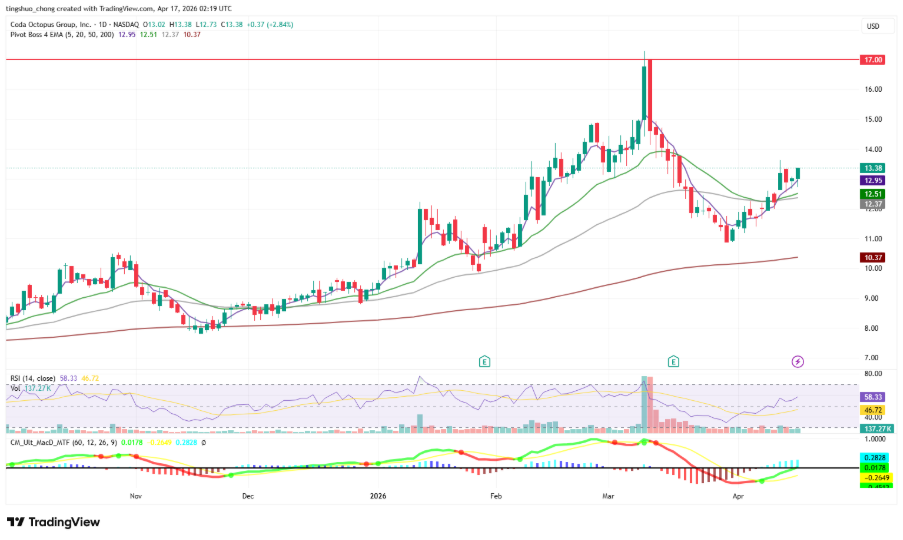
- Shares closed above the 5dEMA.
- RSI is constructive and MACD is about to turn positive.
- Long – Entry 13, Target 17, Stop 11

Firefly Aerospace Inc. (FLY US)
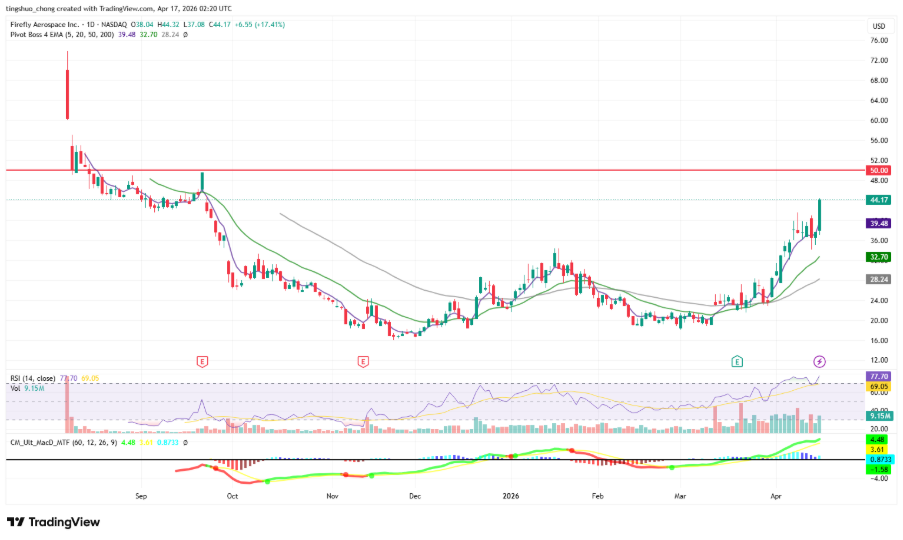
- Shares closed above the 5dEMA with rising volume.
- RSI is slightly overbought but MACD is still constructive.
- Long – Entry 40, Target 50, Stop 35


Olam Group Ltd. (OLAM SP)
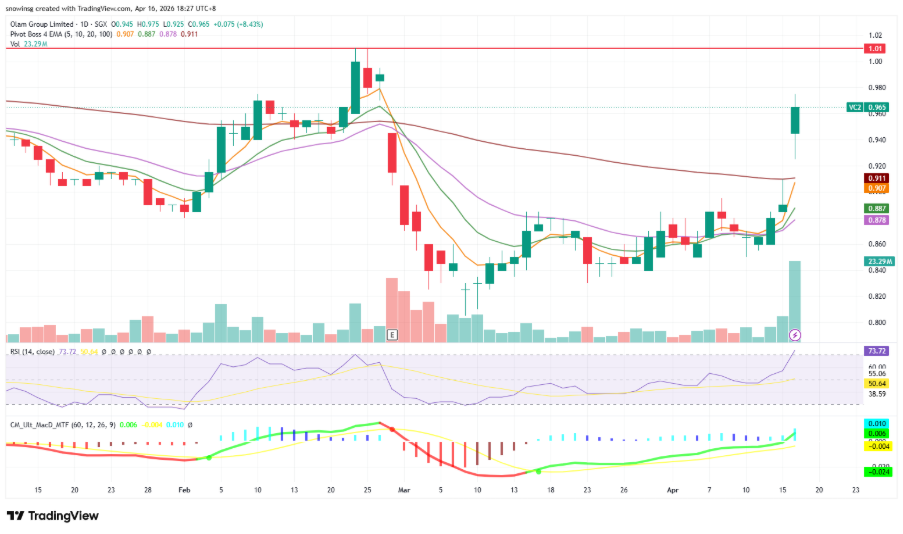
- Shares closed at a one-month high above the 100dEMA with a surge in volume.
- MACD is constructive, while RSI is at an overbought level.
- Buy – Entry 0.95, Target 1.01, Stop 0.92

COSCO Shipping International Singapore Co Ltd. (COS SP)
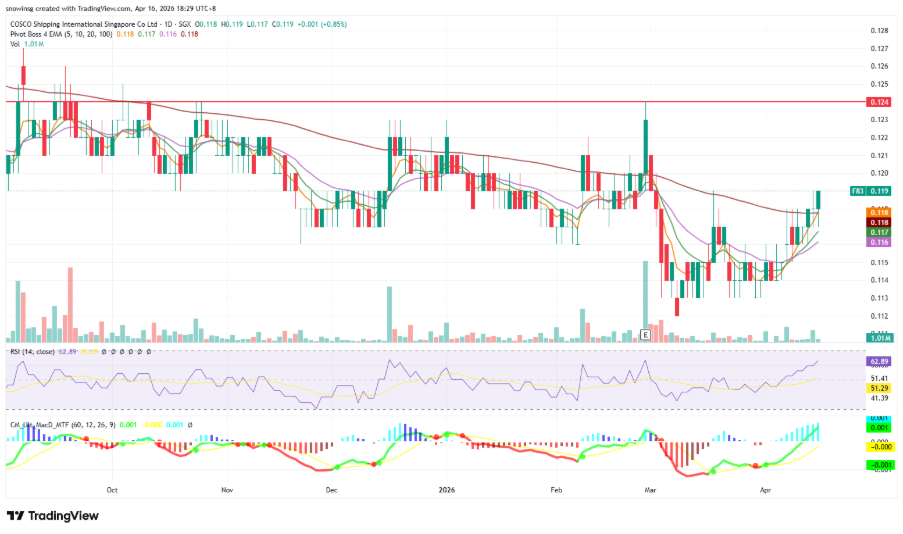
- Shares closed at a one-month high above the 100dEMA. The 5dEMA crossed the 100dEMA.
- Both RSI and MACD are constructive.
- Buy – Entry 0.118, Target 0.124, Stop 0.115


Auntea Jenny (Shanghai) Industrial Co Ltd (2589 HK)
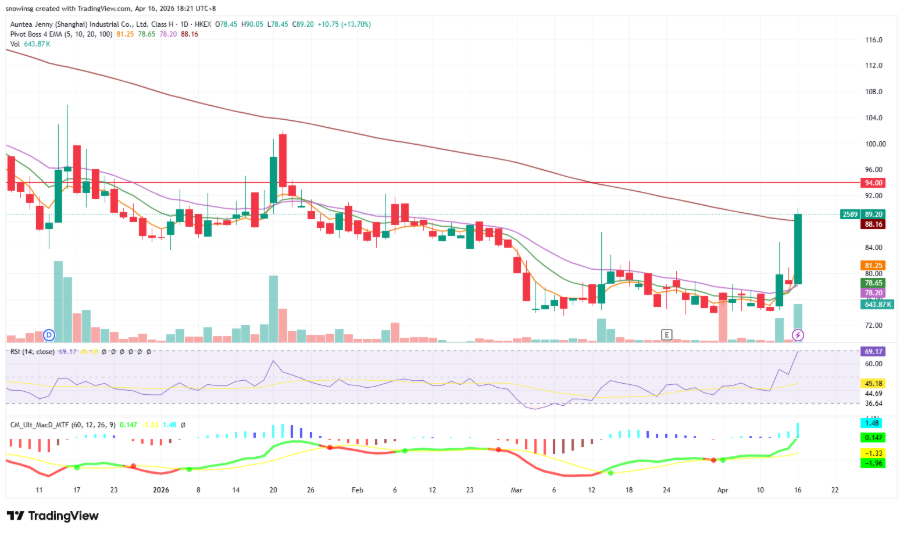
- Shares closed at a two-months high above the 100dEMA with a surge in volume.
- Both RSI and MACD are constructive.
- Long – Entry 86, Target 94, Stop 82
Haidilao International Holding Ltd. (6862 HK)
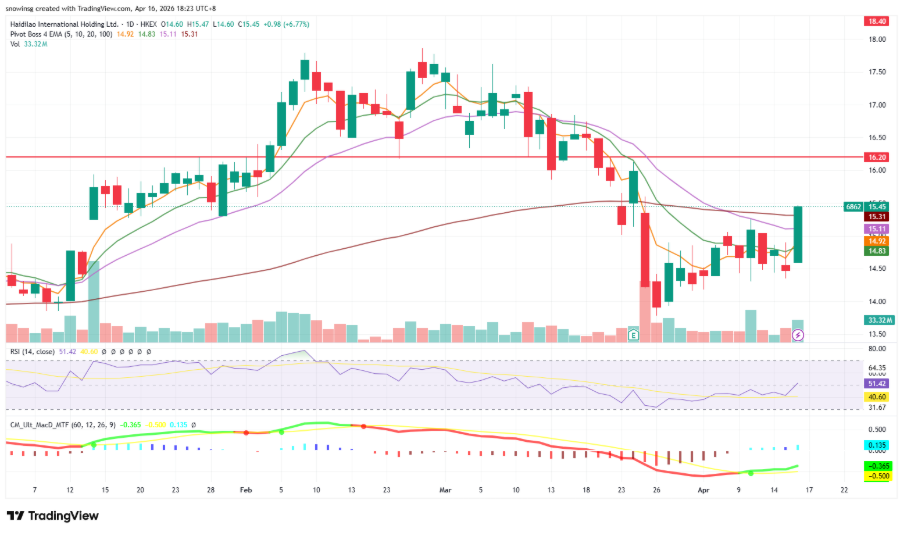
- Shares closed above the 100dEMA with rising volume. The 5dEMA crossed the 10dEMA.
- Both RSI and MACD are constructive.
- Long – Entry 15.0, Target 16.2, Stop 14.4


Taiwan Semiconductor Manufacturing Company Limited (TSM)
- 1Q26 Revenue: $35.9B, +40.6% YoY, beat estimates by $410M
- 1Q26 GAAP EPADR: $3.49, beat estimates by $0.11
- 2Q26 Guidance: 2Q26 revenue guided to US$28.4B to US$29.2B, with gross margin of 57% to 59% and operating margin of 47% to 49%.
- Comment: The quarter was exceptionally strong. TSMC reported record 1Q26 profit of NT$572.5B, supported by continued demand for advanced nodes and AI-related semiconductor volume. This marks another quarter of very strong double-digit earnings growth and confirms that the company remains the central manufacturing beneficiary of the current AI infrastructure cycle. The most important driver remains leading-edge mix. Reuters reported that 3nm now accounts for roughly 25% of revenue, versus just 6% two quarters earlier. That shift is critical because it supports both revenue growth and mix quality, while reinforcing TSMC’s process leadership with customers such as Nvidia, Apple, AMD, and other high-performance computing clients. Guidance was the key positive surprise. Management raised full-year revenue growth to above 30% in U.S. dollar terms and pointed to extremely robust AI demand. The 2Q26 guide also implies another step-up in quarterly revenue, which suggests that current momentum is not merely a one-quarter spike but is carrying into the next leg of the year. Capex intensity is also increasing. TSMC now expects to spend at the high end of its US$52B to US$56B capex range, largely to expand 3nm capacity and support advanced packaging and overseas ramp-up. This is strategically supportive because it indicates customer commitments remain strong enough to justify continued large-scale investment, but it also means investors should monitor margin implications from overseas fab expansion over time. The principal risks remain geopolitics and capacity constraints. TSMC has flagged supply tightness in advanced packaging and remains exposed to regional concentration in Taiwan, while China and broader trade policy remain structural overhangs for the stock. Management has tried to mitigate supply-chain risk through safety stock and regional diversification, but these are still material variables for valuation. The market reaction was constructive on the results and guidance raise, both TSMC and ASML as evidence that the AI spending boom remains intact. TSMC delivered a high-quality beat, stronger guidance, and higher capex, all of which reinforce its position as the core foundry enabler of AI compute demand. The near-term debate is no longer about demand strength. It is about how much of that demand is already reflected in the valuation, whether advanced packaging bottlenecks cap upside conversion, and whether geopolitical discounting re-emerges. The variables to monitor are 2nm customer ramp visibility, CoWoS and packaging capacity expansion, gross margin resilience as overseas fabs scale, and whether cloud capex remains as aggressive into 2027. 2Q26 recommended trading range: $330 to $400. Positive Outlook.
台积电(TSM)
- 26财年第一季度营收:359亿美元,同比增长40.6%,超出预期4.1亿美元
- 26财年第一季度公认会计准则每股美国存托凭证收益(EPADR):3.49美元,超出预期0.11美元
- 26财年第二季度指引:营收284亿至292亿美元;毛利率57%–59%;营业利润率47%–49%
- 短评:本季度表现异常强劲。公司录得创纪录的单季净利润新台币5725亿元,主要受益于先进制程节点(尤其是AI相关芯片)需求持续高涨,再次确认台积电为当前AI基础设施周期中最核心的制造受益者。关键驱动力来自领先技术占比快速提升:据路透报道,3纳米制程营收占比已升至约25%(两个季度前仅为6%),这一结构性转变不仅推动收入增长,更强化其在高算力客户(如英伟达、苹果、AMD等)中的工艺领导地位。指引成为最大惊喜:管理层将全年美元计价营收增长预期上调至超30%,并指出AI需求“极为强劲”;Q2指引隐含环比进一步增长,表明当前动能非短期脉冲,而是可持续趋势。资本支出亦同步加码:公司预计全年资本开支将落在520–560亿美元区间的上限,主要用于扩大3纳米产能、先进封装(如CoWoS)及海外工厂(美国、日本、欧洲)建设。此举具战略意义——反映客户承诺足以支撑大规模投资,但也需关注未来海外晶圆厂爬坡对利润率的潜在稀释。主要风险仍来自地缘政治与产能瓶颈:先进封装(尤其是CoWoS)供应持续紧张;台湾地区集中度高,中美科技摩擦及出口管制构成结构性估值折价。尽管公司通过安全库存与区域多元化缓解供应链风险,这些因素仍是长期估值关键变量。市场反应积极,TSMC与ASML财报共同印证AI资本支出浪潮依然强劲。本季为高质量超预期:收入、利润、指引、资本开支全面上修,巩固其作为AI算力基石的地位。当前焦点已从“需求是否强劲”转向:(1)估值是否已充分反映乐观预期;(2)先进封装瓶颈是否会限制订单向收入的转化;(3)地缘风险溢价是否再度上升。后续关键观察点包括:2纳米客户导入进度、CoWoS封装产能扩张节奏、海外工厂规模效应下的毛利率韧性,以及云服务商2027年资本开支是否维持激进。26财年第二季度建议交易区间:330美元至400美元。积极前景。
The Charles Schwab Corporation (SCHW)
- 1Q26 Revenue: $6.48B, +16.0% YoY, miss estimates by $28M
- 1Q26 Non-GAAP EPS: $1.43, beat estimates by $0.04
- Guidance: Management did not provide formal full-year EPS guidance in the press release.
- Dividend/Share Buybacks: Schwab repurchased $2.4B of common shares in 1Q26. The common stock dividend had previously been raised 19%.
- Comment: The quarter was fundamentally strong. Schwab delivered record first quarter net revenues of $6.5B, net income of about $2.5B, and record client engagement metrics. The firm added 1.3M new brokerage accounts in the quarter, while total client assets rose 19% YoY to $11.8T. Trading activity was a major driver. Daily average trades rose 34% YoY to a record 9.9M, and trading revenue increased 20% YoY to $1.09B. That reflects a materially more active retail environment, with clients repositioning during a volatile macro backdrop. Asset gathering was also very strong. Core net new assets were $140B in the quarter, or $158B excluding the planned mutual fund clearing deconversion, and March core net new assets of $79.7B represented the second-highest month ever for the firm. Managed investing net flows rose 46%, which suggests that growth was not only transaction-led but also included deeper wallet-share capture. Net interest income improved, which is important because Schwab’s earnings debate has often centered on cash sorting and balance sheet sensitivity. The principal issue was quality of the revenue beat versus expectations and the stock’s setup into the print. Despite record results, total revenue came in just below consensus, and the stock had already rallied on expectations tied to deregulation and stronger retail activity. Schwab also announced it plans to launch spot cryptocurrency trading in the coming weeks, which is strategically relevant but likely secondary to the market’s near-term focus on revenue conversion and sweep economics. Shares fell about 6% after the release despite the earnings beat as investors focused on the slight revenue miss and broader concerns around cash management economics and valuation after the pre-results rally. The operating read-through is constructive. Client growth is strong, trading activity is elevated, net interest income is improving, and capital return remains meaningful. However, the market reaction indicates expectations had already moved higher, and Schwab still needs to prove that revenue growth can continue to compound without relying excessively on volatility-driven trading activity. The principal variables to monitor are sweep cash trends, the durability of net interest income expansion, managed investing flow momentum, and whether the planned crypto rollout contributes incremental engagement rather than only headline value. 2Q26 recommended trading range: $80 to $100. Neutral Outlook.
嘉信理财(SCHW)
- 26财年第一季度营收:64.8亿美元,同比增长16.0%,略低于预期2800万美元
- 26财年第一季度非公认会计准则每股收益:1.43美元,超出预期0.04美元
- 全年指引:未在财报新闻稿中提供正式全年EPS指引
- 股息与资本返还:第一季度回购24亿美元普通股;此前已将普通股股息上调19%
- 短评:本季度基本面强劲。公司创下一季度历史最高净营收65亿美元、净利润约25亿美元,并录得多项客户参与度新高:新增130万个经纪账户,客户总资产同比增长19%至11.8万亿美元。交易活跃度为关键驱动力:日均交易量同比大增34%至创纪录的990万笔,交易收入增长20%至10.9亿美元,反映零售客户在宏观波动环境下积极调仓。资产聚集同样出色:核心净新增资产达1400亿美元(剔除计划中的共同基金清算业务剥离后为1580亿美元);3月单月净新增797亿美元,为史上第二高月度表现;管理型投资资金流入增长46%,显示增长不仅来自交易,更体现钱包份额深化。净利息收入亦改善,缓解市场对其“现金分层”(cash sweep)模式及资产负债表利率敏感性的长期担忧。然而,市场反应偏负面:尽管多项指标创纪录,总营收仍略逊预期;且财报前股价已因放松监管预期与零售活跃度回升而大幅上涨,抬高了兑现门槛。公司同时宣布即将推出现货加密货币交易,具战略意义,但短期对盈利影响有限。财报发布后股价下跌约6%,主因投资者聚焦微幅营收缺口、现金管理经济模型可持续性疑虑及估值高位。整体运营信号积极:客户增长强劲、交易活跃、NII改善、资本返还持续。但市场已提前定价乐观情绪,嘉信仍需证明其收入增长可持续复利,而非过度依赖波动驱动的交易活动。后续关键变量包括:(1)扫款现金(sweep cash)趋势;(2)净利息收入扩张的持续性;(3)管理型投资资金流动能否维持;(4)加密货币交易上线后能否带来实质性用户参与提升,而非仅营销效应。26财年第二季度建议交易区间:80美元至100美元。中性前景。
PepsiCo, Inc. (PEP)
- 1Q26 Revenue: $19.44B, +8.5% YoY, beat estimates by $500M
- 1Q26 Non-GAAP EPS: $1.61, beat estimates by $0.06
- FY26 Guidance: Affirmed FY26 guidance for 2% to 4% organic revenue growth and core EPS growth of approximately 5% to 7% in fiscal 2026.
- Dividend/Share Buybacks: Reaffirmed approximately $8.9B of shareholder returns in 2026, including about $7.9B in dividends and $1.0B in share repurchases.
- Comment: The quarter was better than expected and, more importantly, the improvement was operationally credible. Revenue rose 8.5% YoY to $19.44B, while adjusted EPS reached $1.61. The headline beat was driven by a combination of affordability initiatives, product refreshes, and continued international strength. North America snacks were the key proof point. PepsiCo had cut prices on selected snack products by as much as 15%, and that appears to have worked. Reuters reported this helped drive the first volume growth in PepsiCo’s North American food business in more than a year, while other coverage highlighted 2% volume growth in North American snacks. That matters because the market had been increasingly skeptical that PepsiCo could restore volume without materially damaging the franchise. The company also benefited from product renovation and mix evolution. Management emphasized reformulations with fewer artificial ingredients, healthier positioning across key snack brands, and incremental traction from beverages such as Poppi and lower-sugar Gatorade. This supports the view that PepsiCo is not relying only on temporary discounting, but is also trying to reposition parts of the portfolio toward changing consumer preferences. The principal caution is margin durability. Price cuts helped demand, but they also create a higher burden on cost execution. Reuters noted that rising energy and raw material costs tied to geopolitical volatility, including the Iran conflict, remain a live risk. Investors will therefore need evidence over the next two quarters that volume recovery can persist without giving back too much on profitability. Shares reacted positively rising 2% after the release as the market responded to the beat and improving North America snack demand. The reaction was justified because this quarter directly addressed one of the core concerns on the stock, namely whether the U.S. snack turnaround was beginning to work. The setup has improved. PepsiCo delivered a better-than-expected quarter, North America snacks showed tangible volume recovery, and full-year guidance was maintained rather than cut. However, there is still a need to see whether the current recovery is durable once promotional comparisons normalize and input cost pressure feeds through. The key variables to monitor are North America volume progression, gross margin resilience under the lower-price strategy, beverage volume stabilization, and whether international growth continues to offset U.S. volatility. 2Q26 recommended trading range: $145 to $180. Neutral Outlook.
百事公司(PEP)
- 26财年第一季度营收:194.4亿美元,同比增长8.5%,超出预期5亿美元
- 26财年第一季度非公认会计准则每股收益:1.61美元,超出预期0.06美元
- 26财年全年指引:重申有机收入增长2%–4%;核心每股收益增长约5%–7%
- 股息与资本返还:重申2026年向股东返还约89亿美元,包括79亿美元股息及10亿美元股票回购
- 短评:本季度表现优于预期,且改善具备运营可信度。营收同比增长8.5%至194.4亿美元,调整后EPS达1.61美元,超预期主因可负担性策略、产品焕新及国际市场持续强劲共同驱动。北美零食业务成为关键验证点:公司对部分零食产品降价高达15%,成效显现——据路透报道,此举推动北美食品业务实现一年多来首次销量增长,其他信源指出北美零食销量同比增长2%。这一进展至关重要,因市场此前高度怀疑百事能否在不损害品牌价值的前提下恢复销量。同时,公司亦推进产品结构优化:管理层强调减少人工添加剂、强化健康定位(如Smartfood、Off the Eaten Path),并在饮料端取得增量突破(如益生元苏打Poppi、低糖佳得乐)。这表明其策略不仅依赖短期促销,更致力于顺应消费者偏好变迁。主要谨慎点在于利润率可持续性:降价虽刺激需求,但也加重成本管控压力;地缘冲突(如伊朗局势)推高能源与原材料成本,构成持续风险。投资者需在未来两季度观察:销量复苏能否在不显著侵蚀盈利的前提下延续。财报发布后股价上涨2%,市场认可超预期表现及北美零食需求回暖——此反应合理,因本季直接回应了市场核心疑虑:“美国零食业务能否真正拐头向上”。当前格局已改善:业绩超预期、北美销量实质恢复、全年指引未下调。但尚需验证当前复苏是否具持久性,尤其在促销基数正常化及成本压力传导后。后续关键变量包括:(1)北美销量走势;(2)在降价策略下毛利率能否保持韧性;(3)饮料销量能否企稳;(4)国际增长是否继续对冲美国市场波动。26财年第二季度建议交易区间:145美元至180美元。中性前景。
Netflix, Inc. (NFLX)
- 1Q26 Revenue: $12.25B, +16.2% YoY, beat estimates by $80M
- 1Q26 GAAP EPS: $1.23, in line with estimates
- Guidance: 2Q26 revenue guided to $12.57B and EPS to $0.78, both below Street expectations cited in coverage. Netflix maintained FY26 revenue guidance of $50.7B to $51.7B.
- Comment: The headline quarter was strong. Revenue rose 16.2% YoY to $12.25B, while EPS of $1.23 came in well above expectations. However, the profit beat was not entirely organic. Coverage noted that results were helped by a $2.8B breakup fee tied to Netflix’s abandoned attempt to acquire Warner Bros. Discovery assets, which materially boosted reported profitability. Underlying revenue drivers still look solid. Recent price increases continued membership growth, and higher ad revenue all contributed to top-line growth. Several reports also noted that Netflix expects advertising revenue to reach about $3B in 2026, roughly double 2025 levels, which remains a major medium-term monetization lever. The problem was guidance quality. Netflix’s 2Q26 EPS guide of $0.78 came in below the roughly $0.84 the Street was expecting, and revenue guidance of $12.57B also missed consensus. The company attributed weaker near-term profitability primarily to heavier content amortization in the second quarter, while indicating margins should improve in the back half of the year. There was also a governance overhang around the release. Reed Hastings announced he will not seek re-election to the board when his term ends in June 2026. This is not a fundamental earnings issue, but it added to the negative market reaction and reinforced the sense that this was a transitional quarter after the failed Warner Bros. transaction. Shares fell sharply about 9% after the release. The stock reaction was driven mainly by the soft 2Q26 outlook rather than the reported 1Q26 beat. The setup remains mixed. Netflix still has credible revenue growth drivers through pricing, ads, live content, and incremental engagement initiatives. However, the quarter did not deliver the clean operating upside that the headline EPS beat initially suggested, because the breakup fee distorted profit quality and management did not raise full-year guidance. 2Q26 recommended trading range: $90 to $130. Neutral Outlook.
Netflix, Inc.(NFLX)
- 26财年第一季度营收:122.5亿美元,同比增长16.2%,超出预期8000万美元
- 26财年第一季度公认会计准则每股收益:1.23美元,与预期基本持平
- 26财年第二季度指引:营收125.7亿美元、每股收益0.78美元,均低于市场预期(EPS预期约0.84美元);全年营收指引维持在507亿至517亿美元
- 短评:本季度顶层表现强劲,但盈利质量受非经营性项目干扰。营收同比增长16.2%至122.5亿美元,反映提价策略、会员增长及广告收入持续贡献。公司预计2026年广告收入将达约30亿美元(较2025年翻倍),仍是中期重要变现杠杆。然而,GAAP净利润显著受益于一笔28亿美元的终止费(因放弃收购华纳兄弟探索资产),大幅推高账面利润,掩盖了核心运营盈利的真实水平。真正引发市场担忧的是前瞻指引偏弱:Q2 EPS与营收指引均不及共识,管理层归因于二季度内容摊销成本上升,并预计利润率将在下半年改善。此外,公司宣布联合创始人里德·黑斯廷斯(Reed Hastings),虽不影响日常运营,但在收购失败后加剧了“过渡期”叙事。财报发布后股价大跌约9%,主因投资者聚焦疲软的Q2展望,而非受一次性收益支撑的Q1表现。当前格局仍显分化:Netflix在定价、广告、直播内容及用户参与度方面具备真实增长动力,但本季未能提供清晰的持续性运营超预期证据——盈利被终止费扭曲,且全年指引未上调。后续关键变量包括:(1)广告收入爬坡速度;(2)内容摊销压力是否如期在下半年缓解;(3)无黑斯廷斯的治理结构能否维持战略连贯性。26财年第二季度建议交易区间:90美元至130美元。中性前景。